



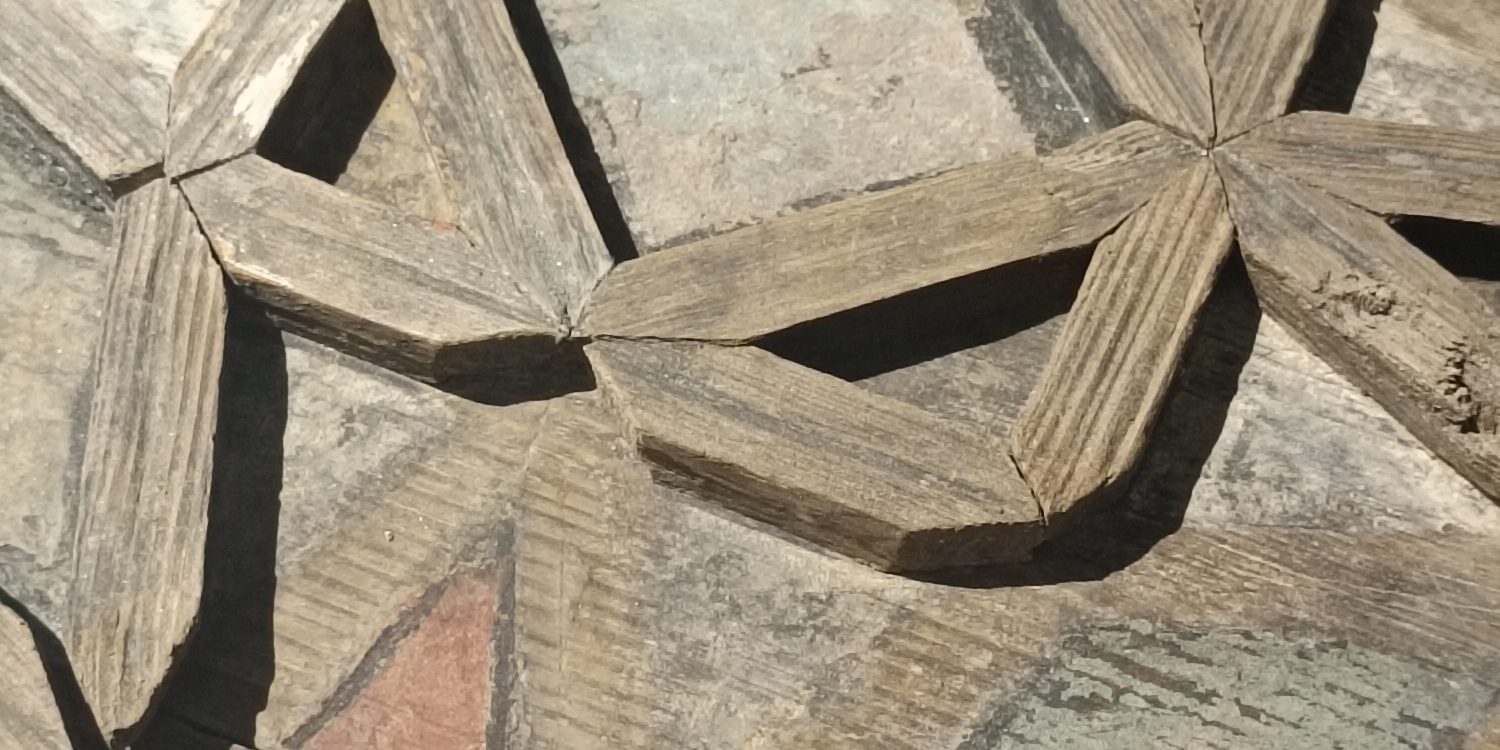
The Antiquarium of the Archaeological Park of Herculaneum, from 10 April 2025, will host a wide selection of wooden furniture and tools from ancient Herculaneum—an unparalleled collection, unique in the world. These extraordinary artifacts, tangible evidence of daily life in the ancient Roman city, have over time become closely identified with the site. The eruption of Mount Vesuvius carbonised, rather than burned, furnishings and objects. Paradoxically, it was the destructive force of the catastrophic eruption of Vesuvius in AD 79 that preserved them for us: the twenty-metre-high mass of superheated pyroclastic mud that descended upon the city created an oxygen-poor environment in which the wood carbonised instead of combusting.
After being displayed for over a year (from 13.12.2022 to 31.12.2023) at the Royal Palace of Portici, the wooden furnishings now take up residence—on an experimental basis—at the Antiquarium, arranged to recreate two typical rooms of a Roman house, thereby restoring the original functionality of the objects. Visitors are offered an enriched experience that complements the knowledge of the maritime activities of ancient Herculaneum—highlighted in the visit to the Boat Pavilion—and the luxurious lifestyle conveyed through the gold, paintings, and statues exhibited on the floor beneath the wing dedicated to the wooden artifacts.
Opening the new exhibition was the Director General of Museums, Prof. Massimo Osanna, who stated:
“Herculaneum Archaeological Park now stands as an emblematic model of international collaboration in the field of cultural heritage. The joint efforts of the Park and the Packard Humanities Institute have enabled significant progress in safeguarding, enhancing, and making the site accessible, restoring to this place renewed scientific and cultural centrality.
The results achieved demonstrate how cooperation between public and private sectors can generate effective and sustainable initiatives, capable of combining scientific rigour with visionary planning. Every advancement in Herculaneum is not only a success for archaeological research, but also a concrete contribution to the growth of the community and of cultural tourism. The exhibition of carbonised wooden artifacts offers an extraordinary opportunity to show how the fragility of ancient materials can inspire new solutions for conservation and enhancement. The use of innovative technologies and the combined contribution of specialist expertise have made possible a rigorous and accessible display, restoring to the objects their original function and meaning—a narrative that, through material traces, continues to give voice to the ancient city.”
“After the exhibition at the Royal Palace of Portici, it was essential to dedicate a specific display space to the wooden artifacts due to their uniqueness,” stated Director Sirano. “Thus, today the Antiquarium becomes not only a repository for these carbonised wooden furnishings, but also a window onto a category of archaeological materials that makes Herculaneum unique worldwide. The finely crafted, decorated, and even inlaid wood is not merely a miraculous survivor of the eruption—it is a thread that connects antiquity to our own everyday experience. Everything speaks in Herculaneum: each artifact is not simply a fragment of the past, but a witness to lived lives. Today we can offer the public an experience that goes beyond a simple visit—an emotional journey through the objects, architecture, and stories of ancient Herculaneum. We wished each step through the Park to be a moment of discovery and reflection. From the Boat Pavilion, recounting the drama of the final instant, to the extraordinary artifacts that reveal daily activities, every object is a piece of a broader narrative that speaks of life, hope, and resilience.”
The collection of carbonised wooden furnishings dates back to excavations undertaken by Amedeo Maiuri beginning in the 1920s and is especially significant for the recovery technique used, based on consolidation with paraffin. Excavations carried out during the first decade of the 21st century in the area of the Villa of the Papyri and along the eastern part of the ancient shoreline brought to light new fragments of precious wooden and ivory furniture, as well as the remains of a roof and a polychrome wooden coffered ceiling belonging to the Marble Hall of the House of the Relief of Telephus. These remarkable discoveries prompted an intensive phase of restoration and research into the function, production, and conservation of the wooden artifacts—materials affected not only by carbonisation but also by high levels of water absorption. The complex research process was carried out in close collaboration with the archaeologists and conservators of the Packard Humanities Institute, with the aim of deepening knowledge and developing increasingly effective conservation strategies.
The fragility of these artifacts has made clear that every move is a delicate and risky operation. For this reason, the new exhibition has been designed to highlight these exceptional objects through innovative technical solutions and advanced technologies, ensuring both public access and optimal long-term conservation. The display has been organised in compliance with conservation standards, with constant monitoring of the microclimatic conditions of the exhibition spaces. This approach combines heritage protection with an optimal visitor experience.
The particular characteristics of the wooden artifacts—combining conditions found nowhere else but at Herculaneum—have demanded significant additions to the scientific literature. Although still in an experimental phase, the operations undertaken in recent years—both the most recent restoration campaigns and the trials carried out in collaboration with internationally renowned research institutes—have contributed to improving our understanding of this material, its deterioration, and the most suitable treatments to preserve it.
The exhibition design, by ACME04 srl, has given the space a new identity, placing specific and primary attention on the conservation of the works on display, aided by an active climate-control system supplied by Tecno-El Tecnologie Elettroniche srl. Coloured backdrops inspired by the interiors of Roman domus and a complex system of display cases showcase the most representative and refined pieces of the Herculaneum wooden corpus, such as the polychrome fragments of the celebrated Telephus Roof, several lararia, cabinets, tables, a bed, a cradle, and the hull of a boat found along the ancient shoreline. Several video screens, showing 3D images, replace traditional labels, creating a highly evocative and engaging environment.
Francesco Sirano concludes his second term as Director of the Archaeological Park of Herculaneum (2017–2025); the Director General of Museums, Prof. Massimo Osanna, has announced that the directorship of the Park is henceforth entrusted to him, with delegation to Francesco Sirano, who will therefore remain operational in managing the Park.