



The Park takes center stage at Race for the Cure and Celiakè?! The Gluten-Free Village: two events, one message – cultural heritage is a tool for well-being, for yesterday and today.
What do a breast cancer awareness marathon and a gluten-free food fair have in common? At first glance, not much. Yet, for the Herculaneum Archaeological Park, both were opportunities to convey the same message: that an archaeological site is not just a place of the past, but a mirror capable of reflecting the questions and values of the present.
In May, the Park participated in two national events promoted by the Ministry of Culture in Rome, bringing with it stories of bodies, food, care, and resilience. Two very different events in terms of audience and vocation, united by a subtle and precious thread: the belief that cultural heritage, when truly experienced, is beneficial.
At the Circus Maximus, in the name of prevention
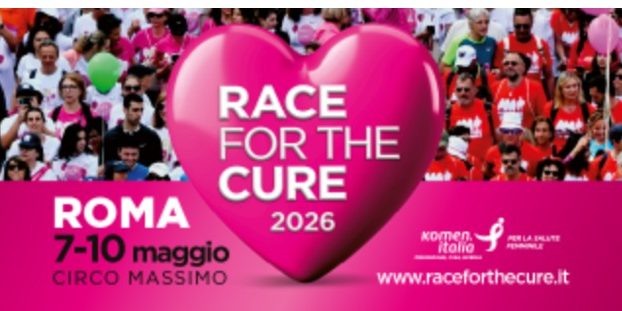
From May 7th to 10th, Rome’s Circus Maximus became the beating heart of the 27th edition of Race for the Cure, Europe’s largest event dedicated to the fight against breast cancer. Tens of thousands of people, the colorful faces of the “Women in Pink,” families, associations, and institutions: a rare collective energy, which each year reminds us that prevention is an act of care for ourselves and others.
In this context, the Herculaneum Archaeological Park chose to be present. In the Ministry of Culture’s exhibition space, two videos presented Herculaneum in a unique way: not only as a UNESCO World Heritage site, but as a place where human frailty was transformed into extraordinary memory. “Via Mare e il Parco” and “Vivere il Patrimonio”—both produced in collaboration with the Packard Humanities Institute—rendered images of daily life, of bodies that inhabited the streets of the ancient city, of a community caught in the eruption and consigned, precisely for this reason, to eternity.
Because Ercolano, ultimately, is also this: a story of resistance. And in an event celebrating the strength of those facing illness, telling that story had a profound meaning.
At Cascina di Sotto, the ancient table meets inclusion
A few days later, on May 16th and 17th, it was the turn of Celiac?! The gluten-free village – 2nd edition – the Roman event dedicated to celiac disease and a healthy diet, hosted at Cascina di Sotto (Via Boccea 922, Rome). The Ercolano Archaeological Park participated in the rich program of the MiC Area, curated by the Department for the Promotion of Cultural Heritage, with a dedicated presentation and its institutional presence throughout the two-day event.
Archaeologist Maricarmen Pepe gave a speech entitled Grains, oil, and wine. “From eggs to apples. The civilization of food and the pleasures of the table in Herculaneum.” , starting with the exhibition, currently underway at Villa Campolieto, which recounts the food finds discovered in Herculaneum – cereals, legumes, fruit, fish, oil, wine – exceptionally preserved thanks to the eruption of Vesuvius and today capable of giving us a vivid portrait of what was eaten, how it was cooked, and what was sold in the shops of the ancient city.
In particular, the presentation focused on the Mediterranean triad: cereals, oil, and wine, the three pillars of the Roman diet. They were not just food, but central elements in symbolic and religious systems, as well as the cornerstones of the Roman agricultural and urban economy. A diet rooted in the region and culture, surprisingly far removed from today’s sensibilities: diverse, seasonal, and based on simple and natural ingredients.
Recounting all this at a fair dedicated to food inclusion wasn’t an academic exercise: it was a way of saying that the dialogue between antiquity and the present, between archaeology and everyday life, is more fertile than one might imagine.
Herculaneum outside its borders
The two Roman remains are part of a journey the Park is consciously building: moving beyond the archaeological area without losing its identity, bringing the UNESCO heritage of Vesuvius to a place where health, food, the body, and community are discussed. Because Herculaneum is more than just a site to visit: it’s a place from which we can still learn so much.