



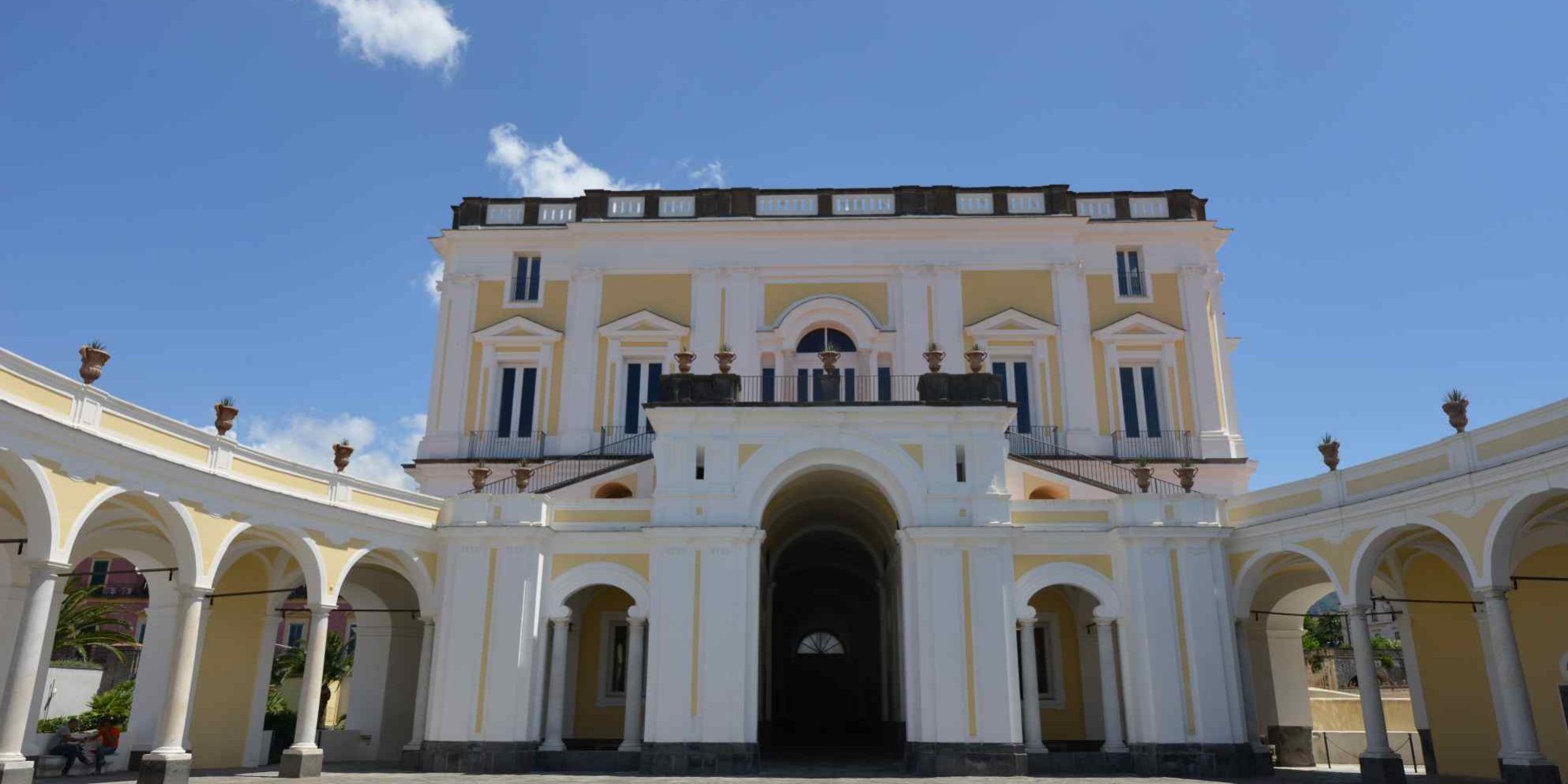
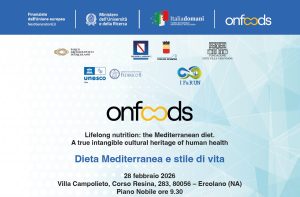
The Archaeological Park of Herculaneum participates in the conference “Lifelong Nutrition: the Mediterranean diet. A true intangible cultural heritage of human health ”, scheduled for February 28, 2026 at Villa Campolieto and which takes place as part of the PNRR OnFoods project.
The initiative, dedicated to the Mediterranean Diet and lifestyle as an intangible cultural heritage of human health, brings together scholars, researchers, and institutional representatives in a multidisciplinary discussion of archaeology, food history, medicine, and nutritional sciences. The conference’s diachronic approach aims to connect the ancient world to contemporary challenges, highlighting the cultural and scientific continuity of Mediterranean dietary patterns.
The Park Management expresses its deep appreciation for the promotion of initiatives aimed at enhancing ancient food culture, considered a privileged interpretative key to understanding the evolution of nutritional models and lifestyles over the centuries, as well as to strengthen the dialogue between cultural heritage and public health.
The scientific program will open with a keynote address by Professor Annamaria Colao, holder of the UNESCO Chair in “Health Education and Sustainable Development” at the University of Naples Federico II, and will continue with contributions dedicated to the culture of wine in antiquity, the daily life and health of the Romans documented by archaeological evidence from Herculaneum, as well as the role of medieval recipe books as a bridge between ancient and contemporary gastronomic traditions.
This is the context in which Professor Maria Vittoria Bramante (Pegaso University) presents her presentation, “Daily Life, Nutrition, and Roman Health in Evidence from Ancient Herculaneum.” The paper explores the relationship between dietary practices, health conditions, and the organization of daily life in the Roman world, in light of the archaeological evidence uncovered at the Herculaneum site, offering an integrated interpretation of material data, social history, and nutritional sciences.
Of particular importance is the Park’s scientific contribution, which offers concrete evidence based on archaeological data on ancient food culture. In this context, a guided tour of the exhibition “From Eggs to Apples: The Civilization of Food and the Pleasures of the Table in Herculaneum” is planned, led by Dr. Maricarmen Pepe, Park Archaeologist. The exhibition illustrates culinary customs, convivial rituals, and the symbolic meanings of food in the Roman world, through artifacts, educational materials, and thematic insights that provide a vivid glimpse into ancient daily life.
The conference will continue with contributions dedicated to the health benefits of physical exercise and innovative approaches to nutritional needs among young people, as part of the IPerseo project, with particular attention to the “Lifelong Nutrition” paradigm, understood as lifelong education in healthy and sustainable lifestyles.
The participation of the Herculaneum Archaeological Park confirms the value of archaeological research as a fundamental tool for understanding the cultural roots of the Mediterranean Diet and its role in building sustainable models of health and well-being, now recognized and promoted internationally as a shared heritage of humanity.