



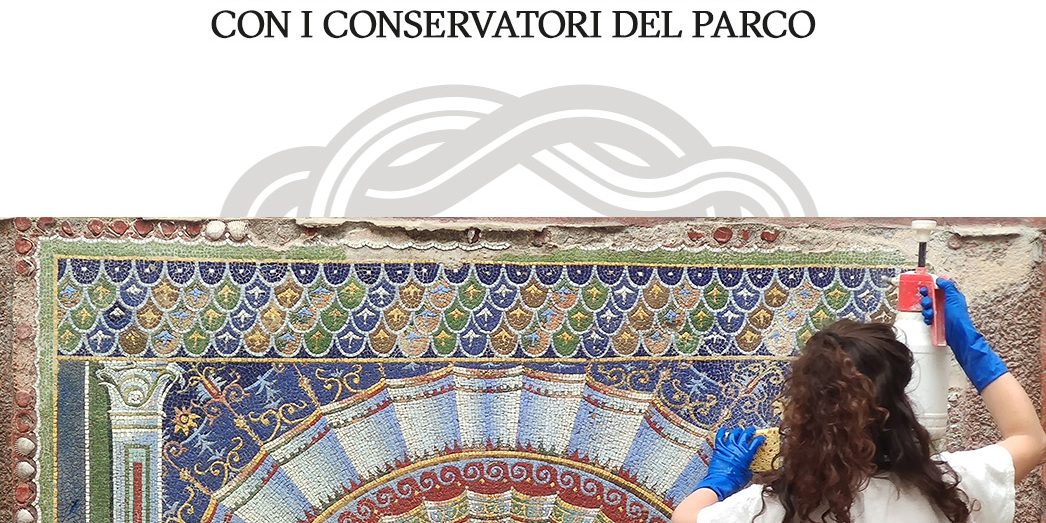
An initiative to enhance skills, processes, and opportunities in the world of construction sites and land transformation.
The Herculaneum Archaeological Park is once again hosting Close-up Cantieri, the project that opens its restoration and maintenance areas to the public, offering a firsthand and privileged glimpse into the daily work of protecting and enhancing the archaeological heritage.
Now in its eighth consecutive year, the initiative allows visitors to go “behind the scenes” of the construction sites to gain a first-hand understanding of the techniques, methodologies, and professionals involved in the site’s conservation, transforming the visit into an opportunity for further study and awareness.
Active since 2019, Close-up Cantieri has become a regular event at the Park, fostering connections between technicians, restorers, internal staff, students, and the community. The project promotes the sharing of skills and best practices, focusing on innovation, safety, sustainability, and organizational efficiency, as part of the Park’s programs to improve its cultural and administrative services.
Each meeting offers guided tours directly to the excavation and restoration sites, to observe firsthand the interventions, tools, and processes that ensure the preservation of the heritage.
Appointment calendar
The meetings will be held on alternate Thursdays:
- 26 february
- 12 e 26 march
- 9 e 23 april
- 7 e 21 may
Visiting times
Two shifts lasting 1 hour each:
- 10:00 – 11:00 (in Italian)
- 11:30 – 12:30 (in English)
It is possible to participate in only one shift per day.
How to participate
The activity is free, upon purchase of a standard entrance ticket to the site (reductions and free admission are also valid according to the regulations).
Reservation required:
- online: https://www.coopculture.it/it/prodotti/close-up-cantieri-2026/
- call center: +39 081 0106490 (lun–sab, 9:00–17:00)
Participation is subject to availability.
Groups of up to 15 people per session.
Welcome and collection at the entrance to the archaeological area.