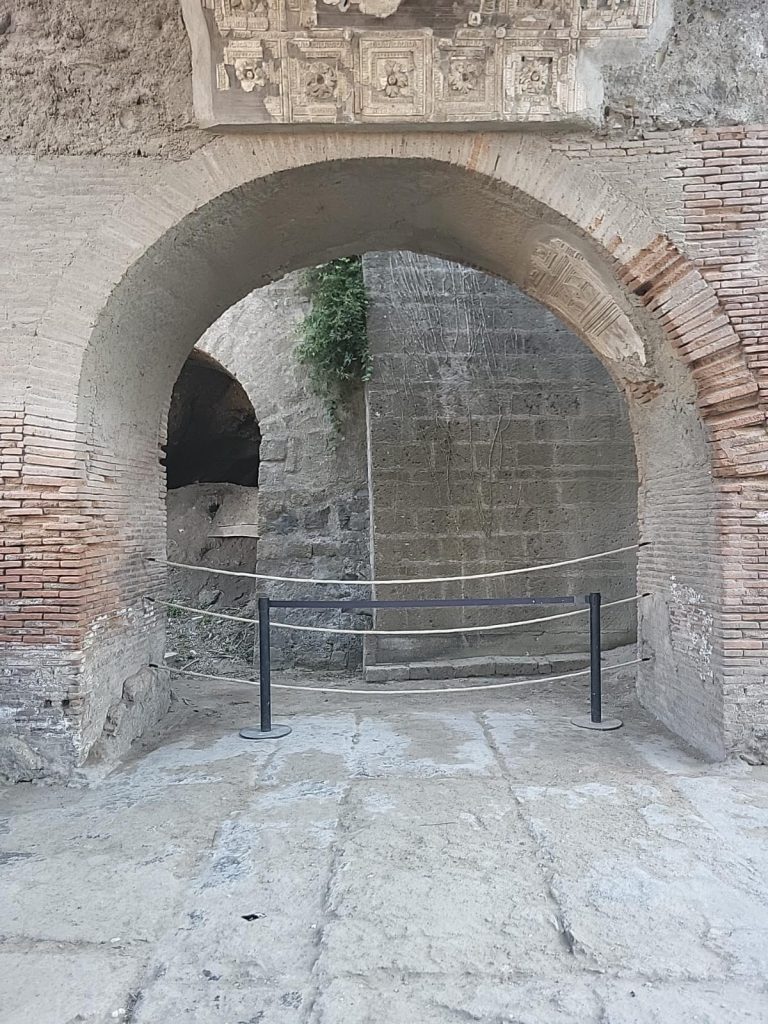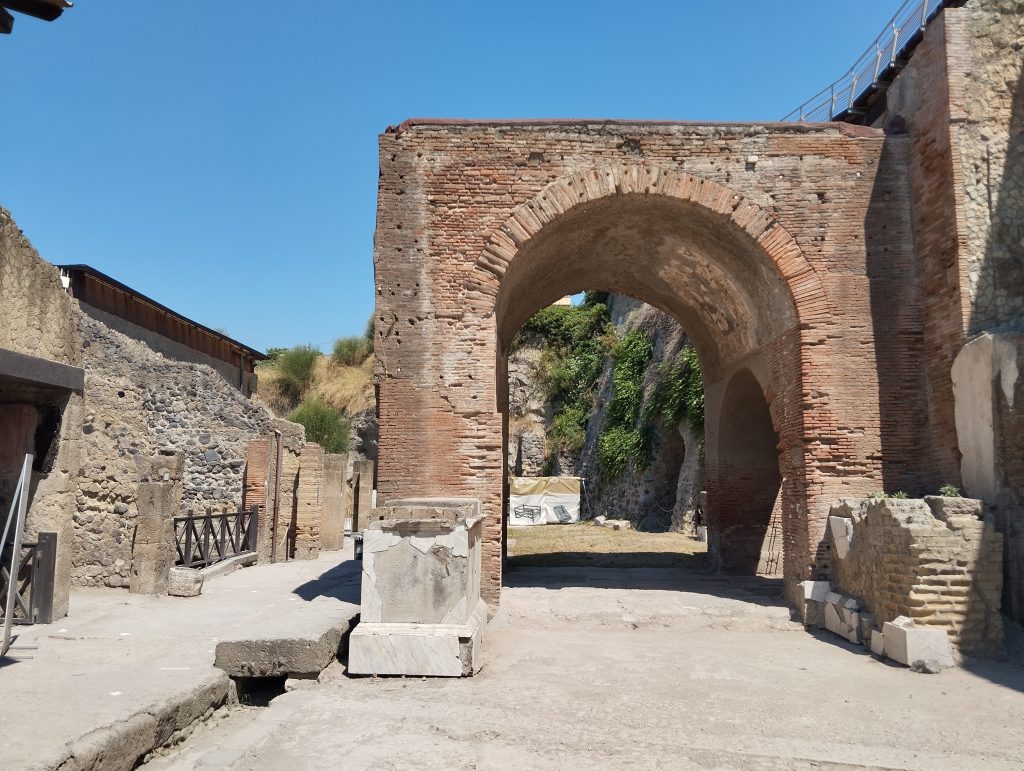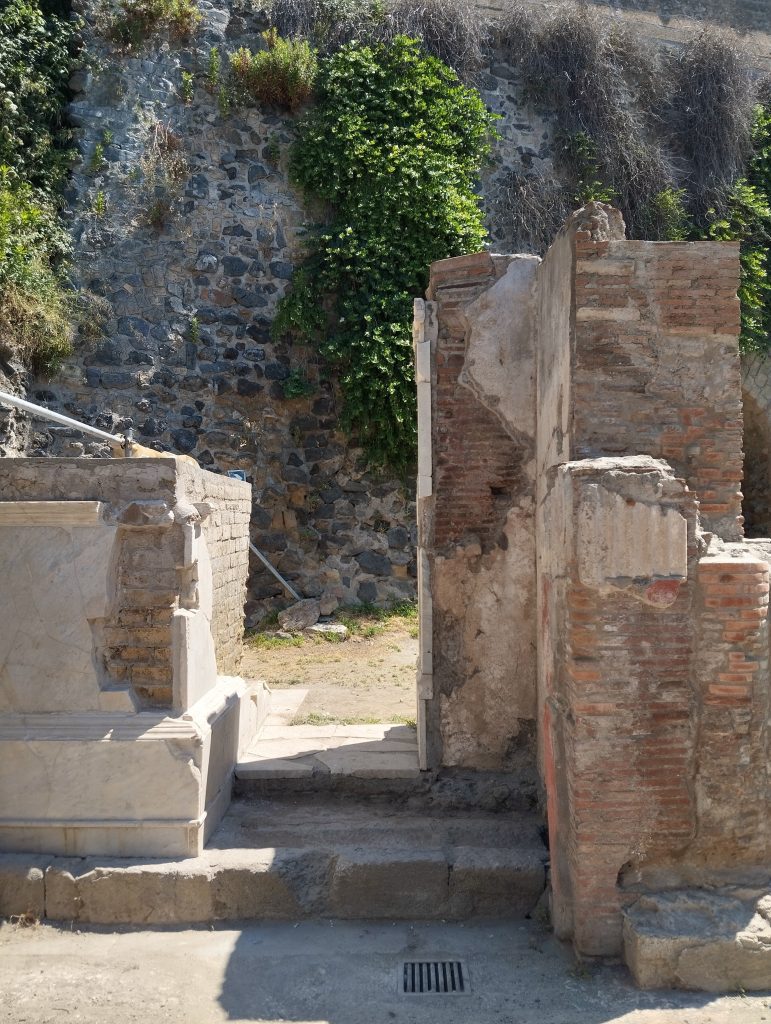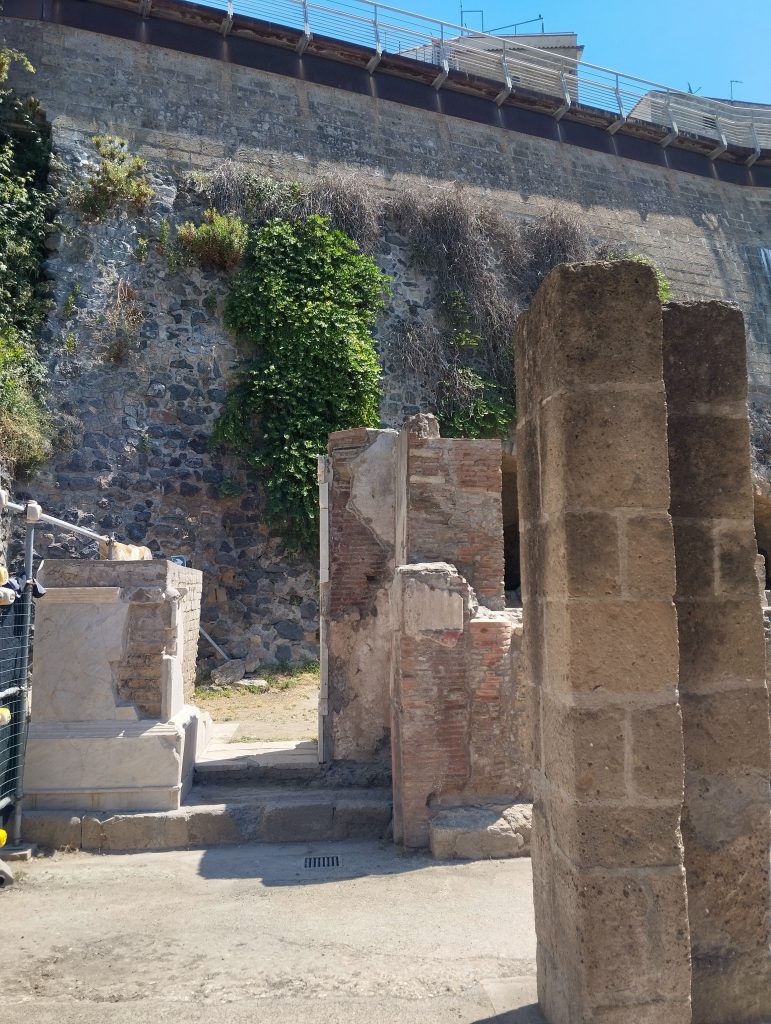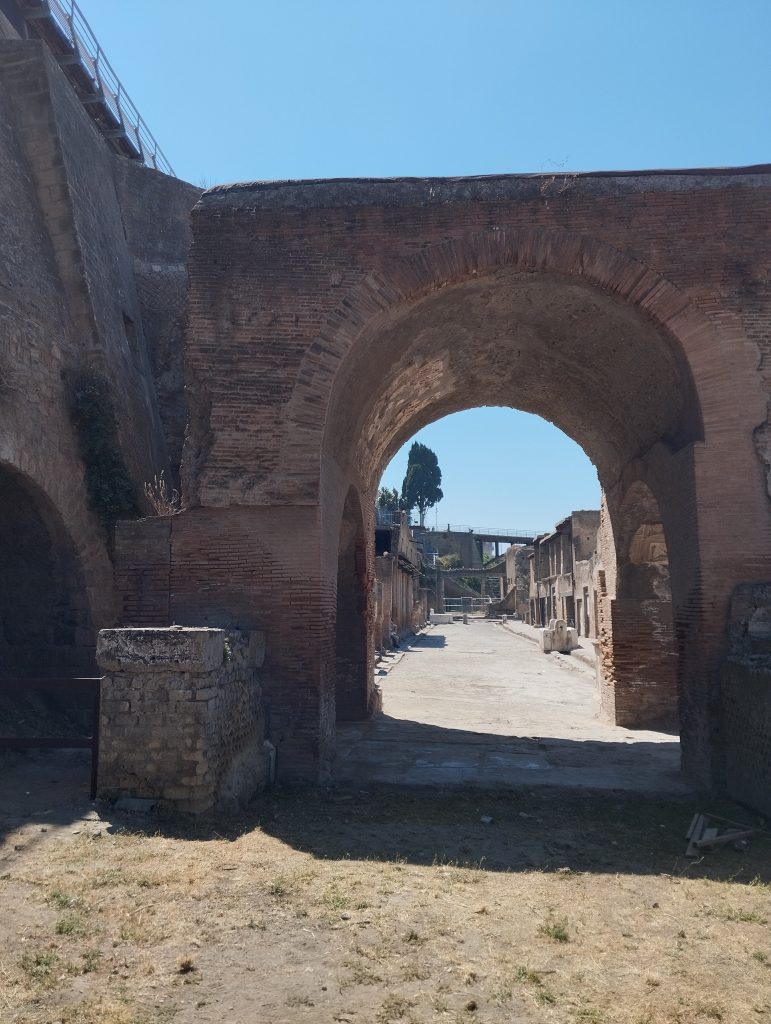


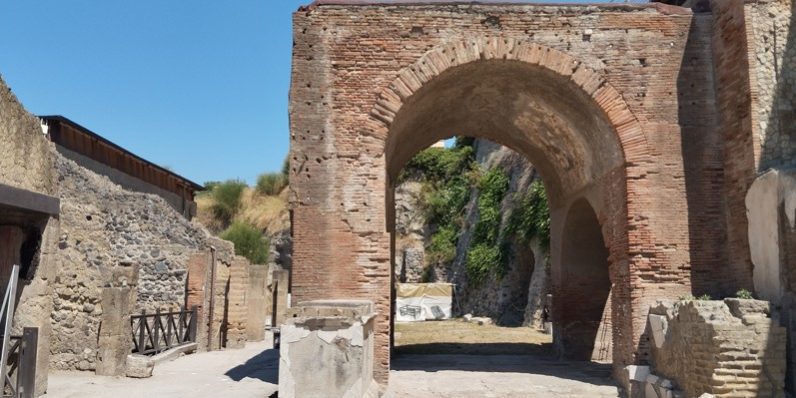
The ancient monumental threshold of the Augusteum, one of the most historically rich memories of the entire site, reopens to the public.
There is a place in Herculaneum that for nearly twenty years visitors could only glimpse from afar, suspended on an elevated walkway, without actually setting foot on its ground. Today, that distance disappears: the Chalkidik reopens to the public, returning to the city one of the most memorable and significant spaces of ancient Herculaneum, thanks to extensive restoration, consolidation, and enhancement of the archaeological structures.
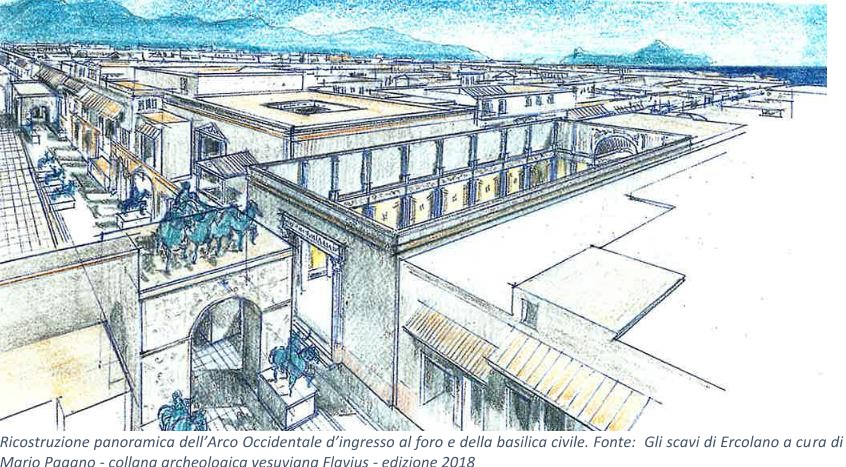
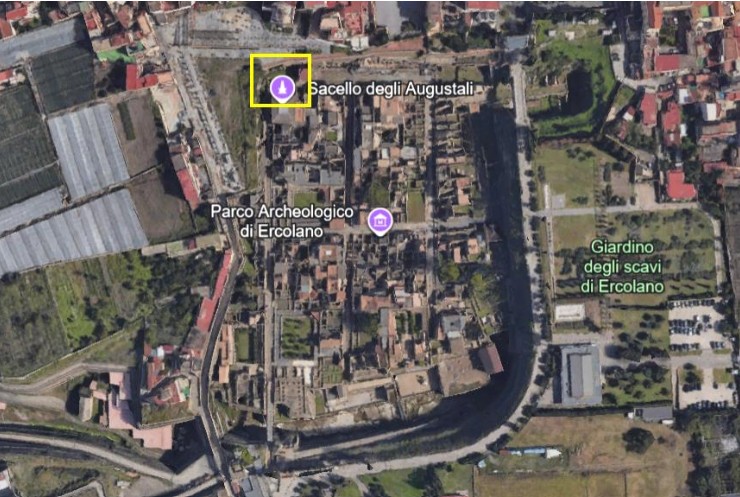
The Chalcidicum (Latin) was the monumental porticoed vestibule along the Decumanus Maximus that led to one of the city’s most important public buildings: an elegant arcaded portico, framed by two large four-sided arches decorated with marble and stucco reliefs, designed to welcome and impress anyone who passed through. It was not a simple passage, but a truly symbolic threshold: through it, citizens, magistrates, and priests entered a space dedicated to the celebration of the imperial house and the community’s political identity.
That building is now identified by scholars as the Augusteum: the most recent studies, conducted by rereading archaeological sources, inscriptions, and the extraordinary decorative apparatus discovered during the Bourbon explorations, have revealed how this place was intimately linked to the imperial cult and the activities of the College of the Augustales. Even today, traveling through Chalkidik, one can sense the full evocative power of that monumentality, capable of immediately describing the articulation of the public spaces of the ancient Roman city.
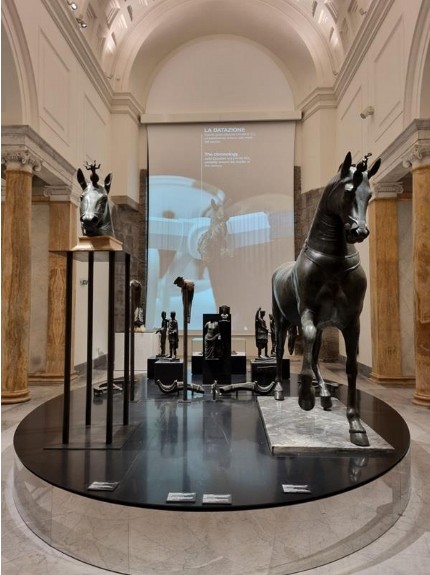
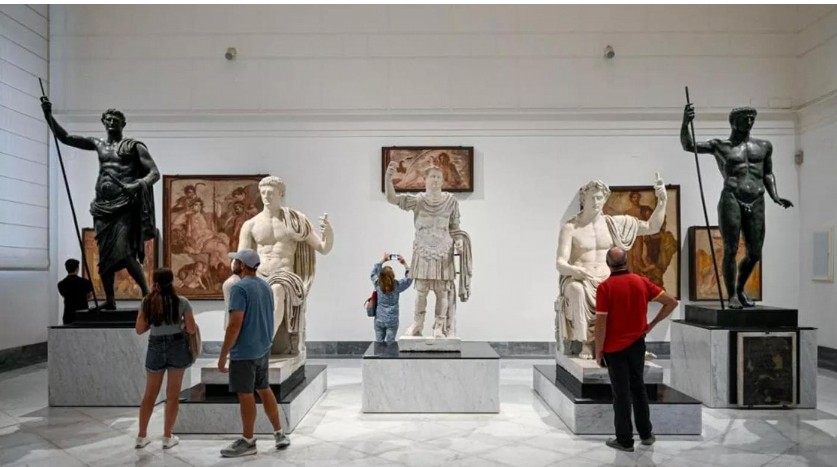
Restoring Chalcidicum to visitors after nearly twenty years is an achievement we are deeply proud of: it is a concrete demonstration of how collaborative work, conducted with skill and dedication, can transform what once seemed distant into reality. This area holds one of the most powerful memories of Herculaneum—the statues that now grace the halls of the National Archaeological Museum of Naples were discovered here during previous excavation phases—and today we can finally offer visitors the chance to walk through it, explore it up close, and feel the weight of its history. This is an important step in our vision of an increasingly accessible, vibrant, and moving park: we will continue on this path, because Herculaneum deserves to be experienced in all its extraordinary depth.
Federica Colaiacomo, Director of the Herculaneum Archaeological Park
An extraordinary result, fruit of a team effort
The work involved both the masonry structures and the decorated surfaces. Integration and consolidation work was carried out on the tops of the pillars to ensure the stability and preservation of the structures, while delicate conservation work was carried out on the valuable decorative elements—plaster, marble elements, and painted surfaces—to preserve the original materials.
The result achieved is the fruit of a virtuous synergy between the different professionals of the Archaeological Park of Herculaneum: architects, restorers and archaeologists worked in close collaboration, sharing skills and methodologies to ensure the best possible outcome of the interventions. Also crucial was the coordination between the companies involved in the various operational phases, which contributed fundamentally to the completion of the works, the arrangement of the spaces and the cleaning and safety activities necessary to guarantee full and safe use of this area of extraordinary importance.
An area of extraordinary historical value
The area of Chalcidicum holds exceptional importance in the history of the excavations at Herculaneum. It was on the pillars of this sector that the famous statuary cycle, now housed at the National Archaeological Museum of Naples, was discovered, one of the most significant sculptural complexes to emerge from the ancient city.
The reopening allows visitors to directly walk through a space previously only visible from a distance via the elevated walkway, offering a more immediate and engaging perception of the monumentality of the ancient complex. It will also be possible to more clearly grasp the relationship between the ancient city and the modern one above, understanding the extraordinary depth at which the archaeological site is preserved.
Along the route, visitors will also be able to see traces left by excavation work and the eruptive events of 79 AD. These material testimonies allow us to perceive the dramatic moment of the city’s destruction as a true “still of time,” frozen for almost two thousand years and now restored to public awareness and understanding.
Reopening to the public
The reopening of the Chalcidice represents a further significant step in the enhancement of the Herculaneum Archaeological Park, which continues to invest in the conservation, safety, and restoration of spaces and testimonies essential to understanding the ancient city.
The goal is to make the archaeological heritage increasingly accessible and understandable, allowing an ever-wider audience to admire the traces of history and appreciate the ongoing research, protection, maintenance, and restoration work that makes it possible to preserve one of the world’s most extraordinary UNESCO sites. Each reopening represents not only the recovery of a physical space, but also the restoration of a new chapter in Herculaneum’s history for the scientific community, citizens, and visitors from around the world.
Sunday, July 5th, free entry to the Park and Villa Sora
The newly reopened Herculaneum Archaeological Park will be open to visitors free of charge starting Sunday, July 5th, when the Herculaneum Archaeological Park will join the ministerial initiative #domenicalmuseo, offering free admission to all visitors. Reservations for free admission to the park are not required and cannot be made online. Free admission tickets must be picked up on the day of admission directly at the ticket office.
Villa Sora
The Vesuvius Archaeological Group will welcome enthusiasts and curious visitors to Villa Sora from 10:30 a.m. to 12:45 p.m. with a free guided tour, leading them to discover the villa’s preserved spaces.
Reservations: 379 2196736 – archeotorre@gmail.com.