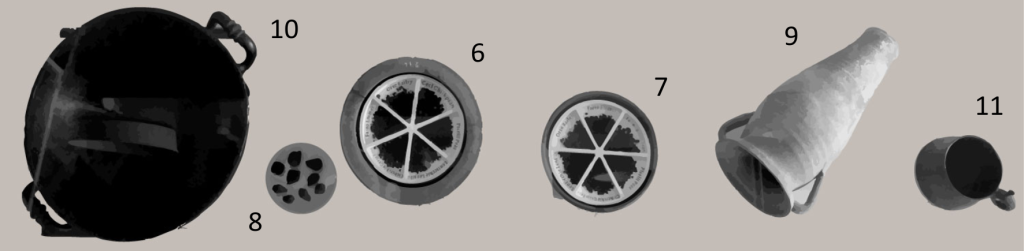


In the kitchens of ancient Herculaneum, as in modern ones, functionality dictated the arrangement and use of tableware. Vessels were distinguished by their specific purpose: storage, cooking, or table service.
This display presents a rich and evocative selection of artifacts that illuminate the food practices, artisanal technologies, and everyday habits of the Vesuvian world, offering an authentic and vivid glimpse into domestic life.
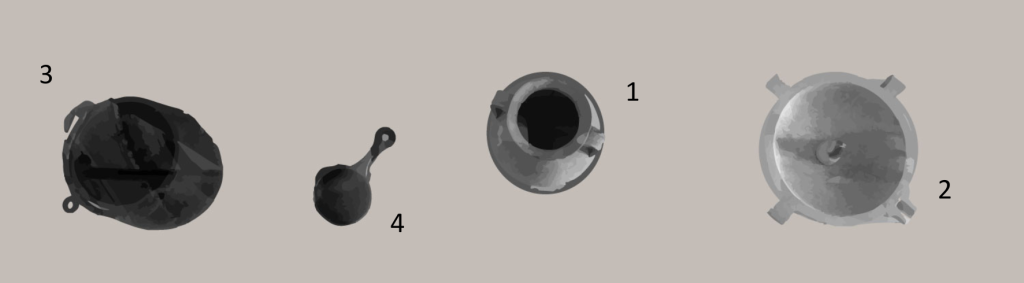
A two-handled jar (olletta, 1) from the House of the Mosaic Atrium bears witness to ancient food storage practices.
From the House of the Carbonized Furniture comes a refined marble mortar (2) with pestle – an essential tool for preparing sauces and condiments. The base is decorated with an engraved design: a six-petaled flower inscribed within a circle, with radiating lines dividing the space into quadrants. This unusual motif for such a utilitarian object reveals a rare attention to aesthetics in everyday tools.
An elegant bronze bucket (3), discovered in the House of the Alcove, stands out for its finely crafted attachments, featuring masks of Erotes framed by palmettes and duck-head protomes at the ends of the handle. Intended for carrying water, it shows how even the most practical objects could take on symbolic and ornamental value.
Of particular note is a bronze saucepan (4) from the House of the Two Atria, a hallmark of Vesuvian craftsmanship from the 1st century AD. It features a ring base decorated with concentric circles, a beaded handle, and a stamp attributable to the workshop of Publius Cipius Polybius, active between AD 65 and 85. Its precise function remains debated—perhaps used in the preparation or serving of beverages – but it clearly reflects the intersection between practical use and symbolic representation in Roman material culture.
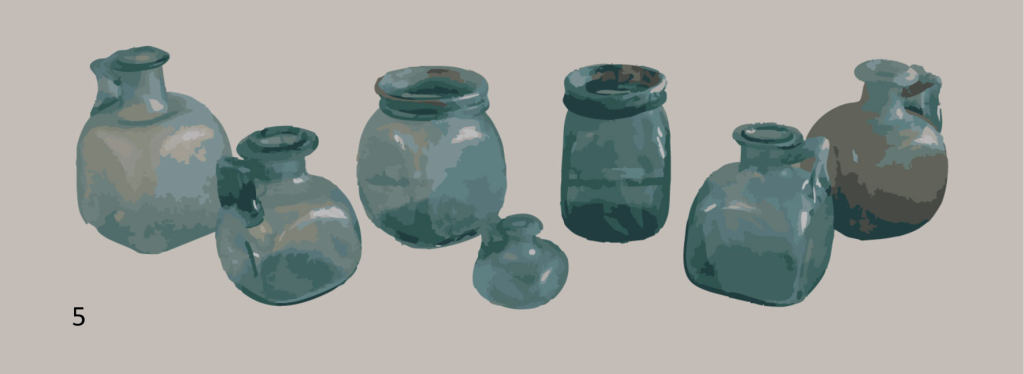
At the center of the display, a group of glass bottles and jars (5) from the House of the Wooden Shrine – discovered inside a carbonized wooden chest – offers insight into the storage and transport of liquids such as oil and wine. Similar containers have also been found at Pompeii and Boscoreale, confirming their widespread use throughout the Vesuvian area.