

From Wednesday 15 July the public will be able to visit the Martusciello Gallery again, getting closer to the arches with the remains of the skeletons and to the ancient coastline of the excavations.
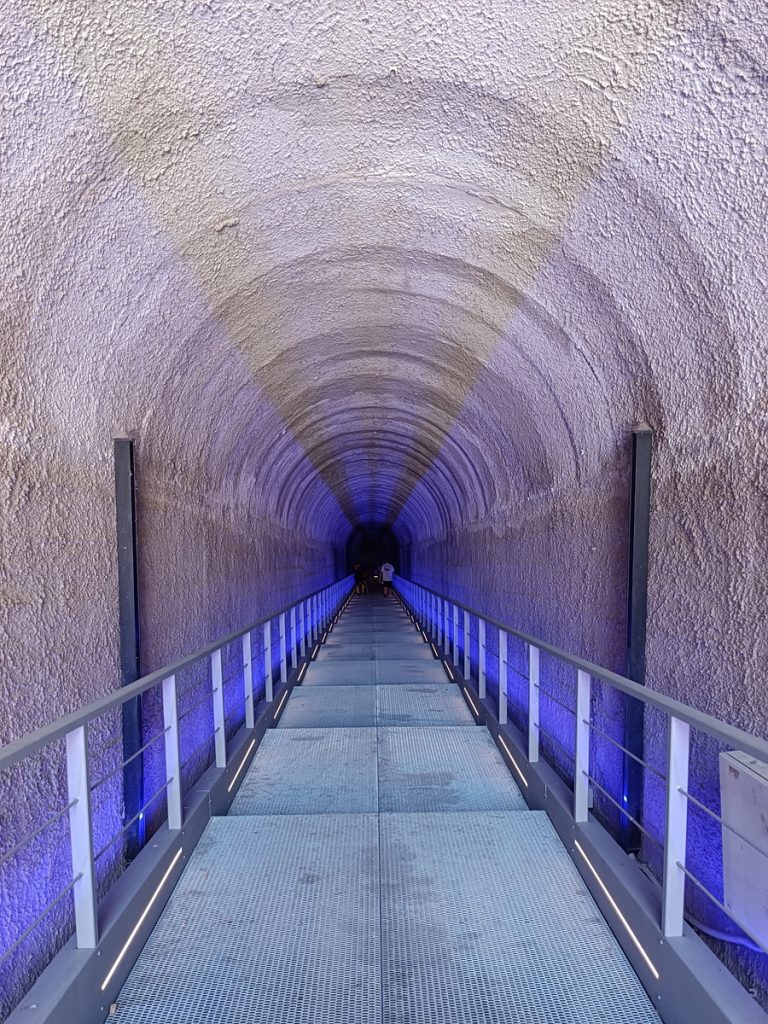
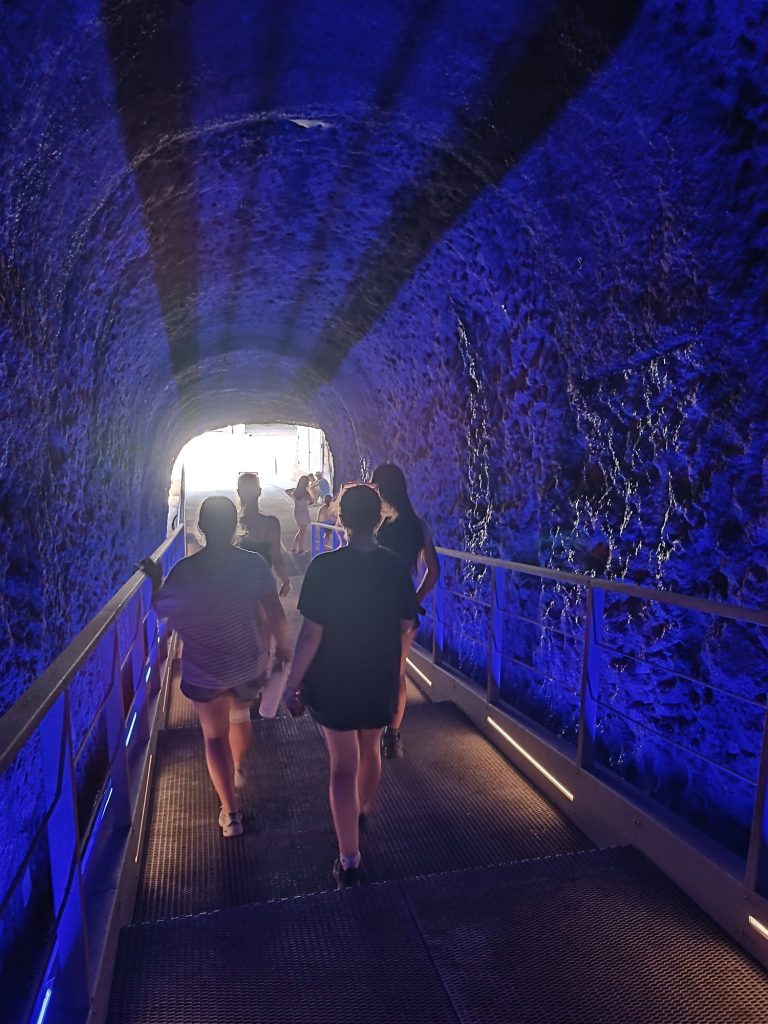
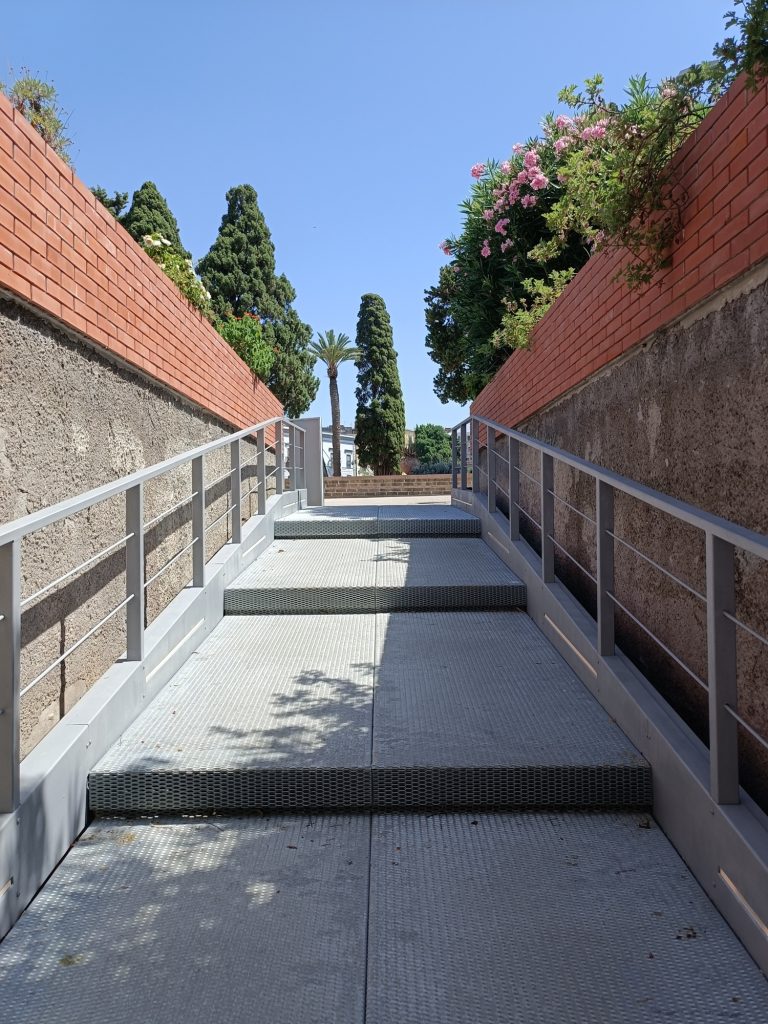
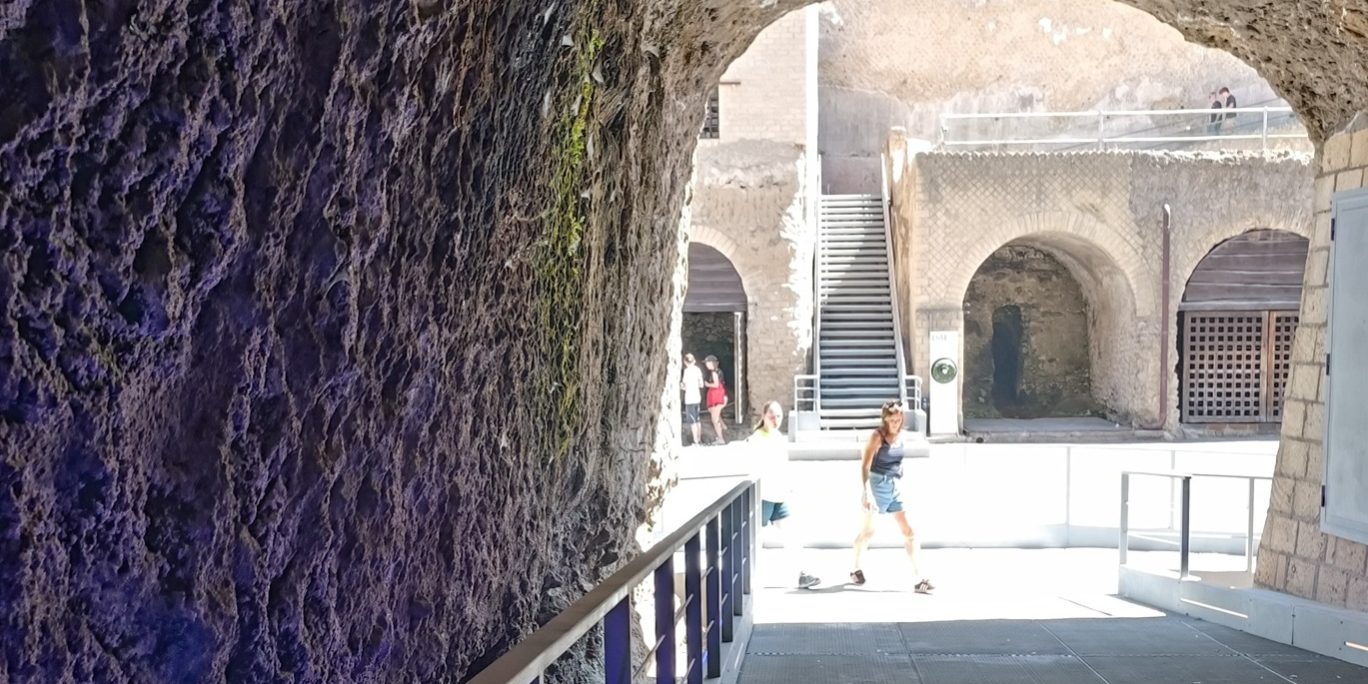
Starting Wednesday, July 15, 2026, the Martusciello Gallery will reopen to the public, offering visitors a new way to reach the Ancient Beach of the Herculaneum Excavations: a fascinating path over 100 meters long, connecting the modern city to the ancient coastline. Here, visitors can admire the skeletons of fugitives kept in the fornices, the ancient boat shelters where the remains of approximately 300 victims of the eruption were found. Walking through the tunnel is almost a journey through time and the drama of the event that struck the city: the ramp is carved into the thick layer of volcanic material that buried it in 79 AD, and crossing it means physically traversing the same eruptive layers, descending step by step toward the ancient sea level that overlooked Herculaneum.
The reopening of this connection is possible thanks to the completion of the works envisaged in the same contract that covered the Ancient Beach and the seafront. These renovations and enhancements allowed the beach area to be reopened to the public in June 2024, also aiming to visually reconnect with the Villa of the Papyri. The new layout now allows for a more direct and engaging connection between the Gallery, the arches, and the ancient shoreline, providing the public with an access route that connects some of the most evocative and emotionally charged parts of the archaeological site.
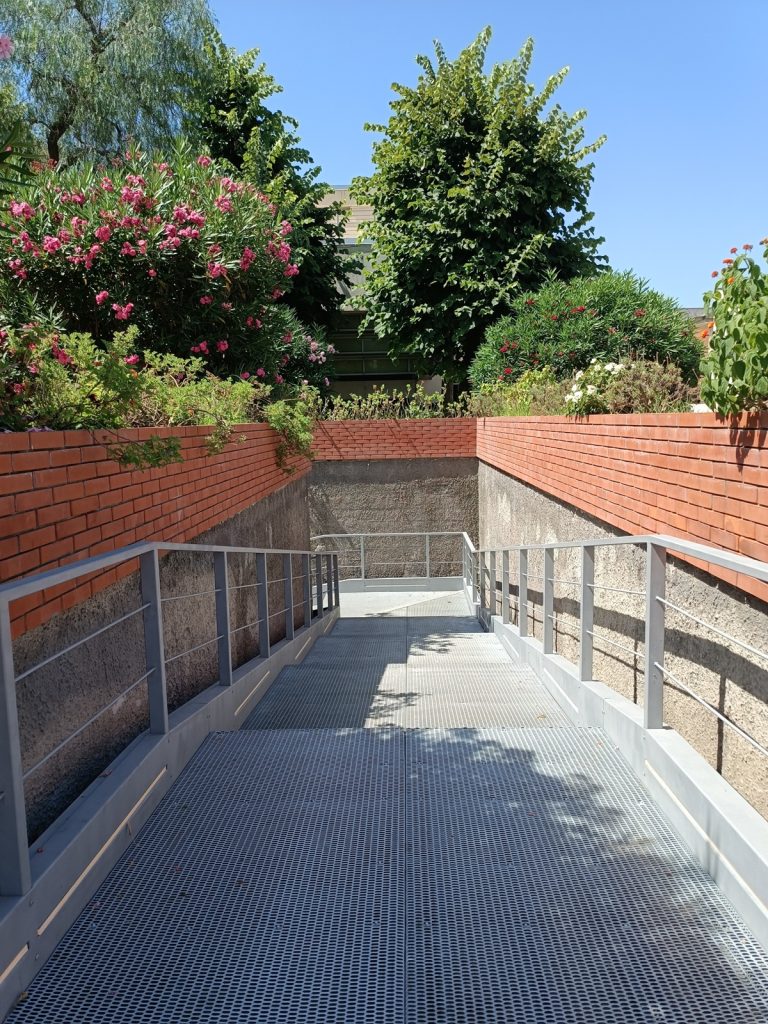
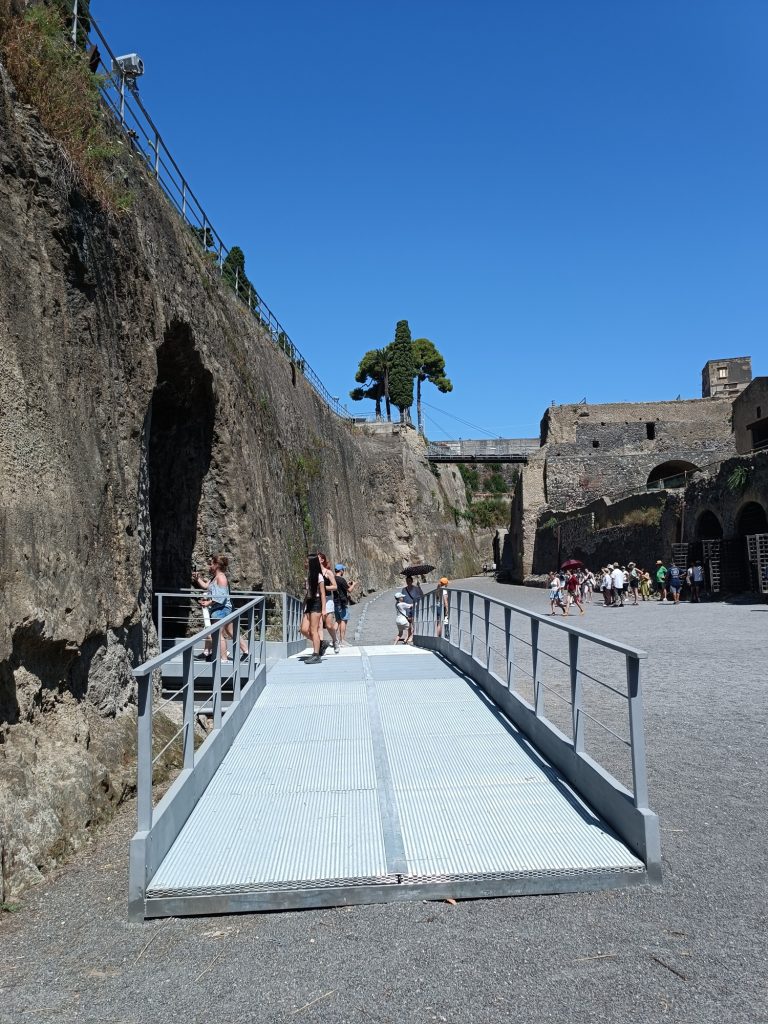
In the Martusciello Gallery the route has been completely renovated: the previous walking grid, which covered the tuff steps, has been replaced by a new system integrated with lighting. A solution designed not only to make the passage of visitors safer and more evocative, but also to facilitate maintenance along the entire route, especially in the area of the water collection tanks and collection pumps, essential elements for the correct functioning of the disposal system of the entire Ancient Beach basin. The light thus accompanies the descent towards the ancient coast with discreet and immersive effects, until the arrival on the beach, where two symmetrical side ramps make the path easier and allow two-way transit, both in and out.
There is an almost moving sense in this return: whoever enters the Martusciello Gallery today relives, in their own small way, the gesture of whoever two thousand years ago landed in Herculaneum right here, from the sea. Those arriving by water saw the city opening up before them in exactly this way: first the arches, the ancient boat shelters which later became the place of the last night for hundreds of people from Herculaneum, and immediately after the scenographic monumental terrace dedicated to Marco Nonio Balbo, designed from the beginning to welcome and impress those arriving from the sea.
“Reopening the Martusciello Gallery means giving visitors an experience that goes beyond a simple visit: it’s the chance to relive, while walking, the same view that two thousand years ago rested on this city when arriving from the sea. It’s an important step in the process of enhancing the Ancient Beach and the seafront, made possible by the daily work of all the Park’s professionals,” says Dr. Federica Colaiacomo, director of the Herculaneum Archaeological Park.
The new lighting – Two different lighting systems were designed, one inserted into the side of the new grating to ensure safe walking on the walking surface, the other, invisible from the path, is inserted between the outer side of the ramp and the tunnel dug into the volcanic material, and provides indirect illumination of the tunnel itself, with the possibility of selecting an infinite number of light colors, some evocative of the eruptive material.
A team effort – Behind the reopening of the ramp is the coordinated work of many different professionals from the Herculaneum Archaeological Park, which oversaw the technical management, and the Packard Foundations, responsible for drafting the executive project and providing support throughout the work. Thanks to the joint, often silent and never-too-assured commitment of archaeologists, architects, engineers, and restorers who daily oversee the preservation of the ancient structures; the security staff who supervise the routes and safely accompany visitors; the ticket office and communications office who make information accessible to the public; and the administrative offices who facilitate every intervention, it is possible to restore another piece of Herculaneum to the city and its visitors every day.