



The “before and afters” of open and shared restoration
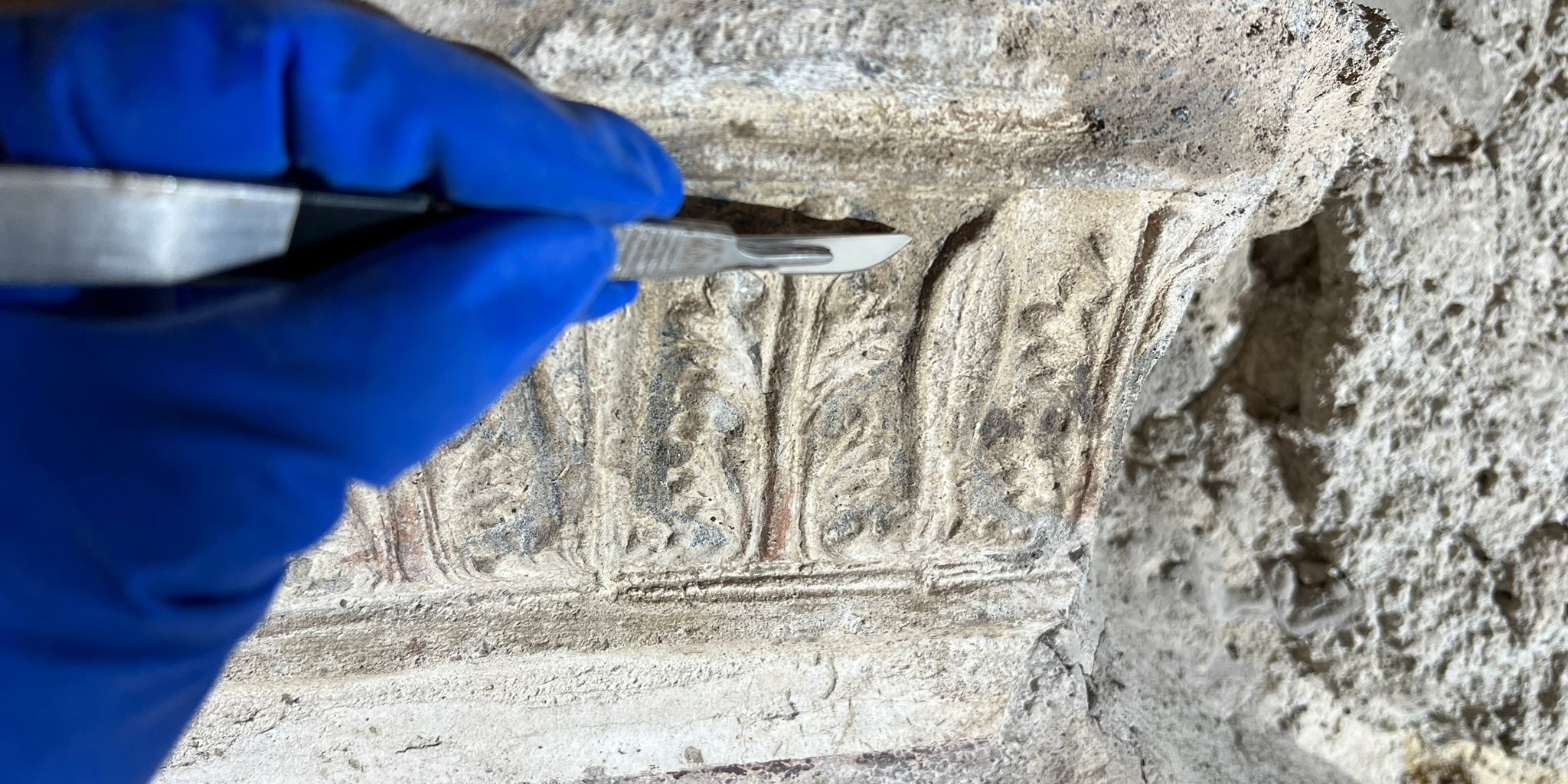
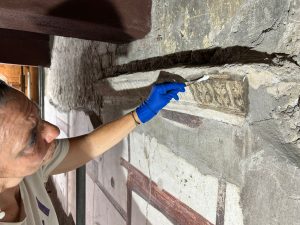
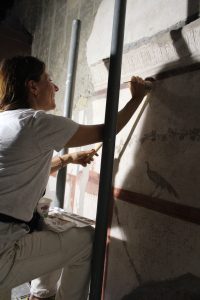
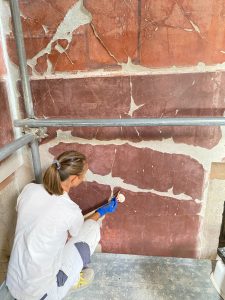
The Bicentennial House finally reopened in 2019, after an important and delicate recovery phase to ensure safe use, is now undergoing an additional conservation phase, during which visitors can be offered, at the same time, the opportunity to take a closer look at the ongoing restoration activities. The site today is thus configured as an open-air laboratory, where scientific rigor, transparency, enhancement and sharing with the public are intertwined. L’esperienza, sulla scia dei “close up cantieri”, consente infatti di vivere un momento unico di confronto diretto tra le porzioni già restaurate e quelle ancora da trattare, cogliendo con immediatezza la trasformazione del “prima e dopo”. A before-and-after that might be perceived externally as a simple aesthetic intervention, but which, in good restoration practice, involves the complex reduction of the causes of degradation and the return of surfaces to the patina of time.
Why “participatory construction sites”?
The preservation of the “outdoor” archaeological heritage requires multiple attentions, continuous and careful care, which the Herculaneum Archaeological Park implements through an extensive program of cyclical planned maintenance interventions, which include works to reduce the causes of degradation and improve the state of affairs. There is always a lot of excitement behind these activities, and it is not always possible to make the visitor participate. The intent to share the delicate and important work that underlies the conservation of archaeological surfaces is aimed not only at satisfying the visitor’s curiosity but aims, above all, to make them understand its value; a mission, this, for technical workers, that not only enhances today’s visit but makes it possible to be able to enjoy the archaeological heritage for as long as possible.
Visitors who access the Bicentennial House these days have both the opportunity to admire the parts restored during previous work campaigns and to witness live the new works underway in the atrium, according to the now established formula of “participatory construction site.”
The context, the larger project
[1] The extraordinary maintenance project is funded by Act 190 and represents an important milestone in the Park’s growth, following in the footsteps of the first round of extraordinary maintenance, whose project was donated to the Park by the Packard Humanities Insitute (PHI) and completed by the Park in 2021. The current extraordinary maintenance campaign represents the continuity of planned maintenance, for which the Park was entirely responsible for the design and work, but enhancing the approaches and innovation developed by the Packard Humanities Institute team and Park technicians in this area over the past decade. This confirms David W. Packard’s desire to see the Italian state take its cue from the advances made under the public-private partnership in place at Herculaneum since 2001 and carry them forward more and more independently.
A special memory
With the resumption of work at the Bicentennial House, Park staff and the Packard Humanities Institute team remember with deep emotion and gratitude for their work restorer Giuseppe Giordano of the Rome Consortium, who recently passed away. His professional input and collaborative spirit, especially witnessed in the large 2019 construction site at the Bicentennial House, remain alive as an example of dedication and passion for the restoration world.