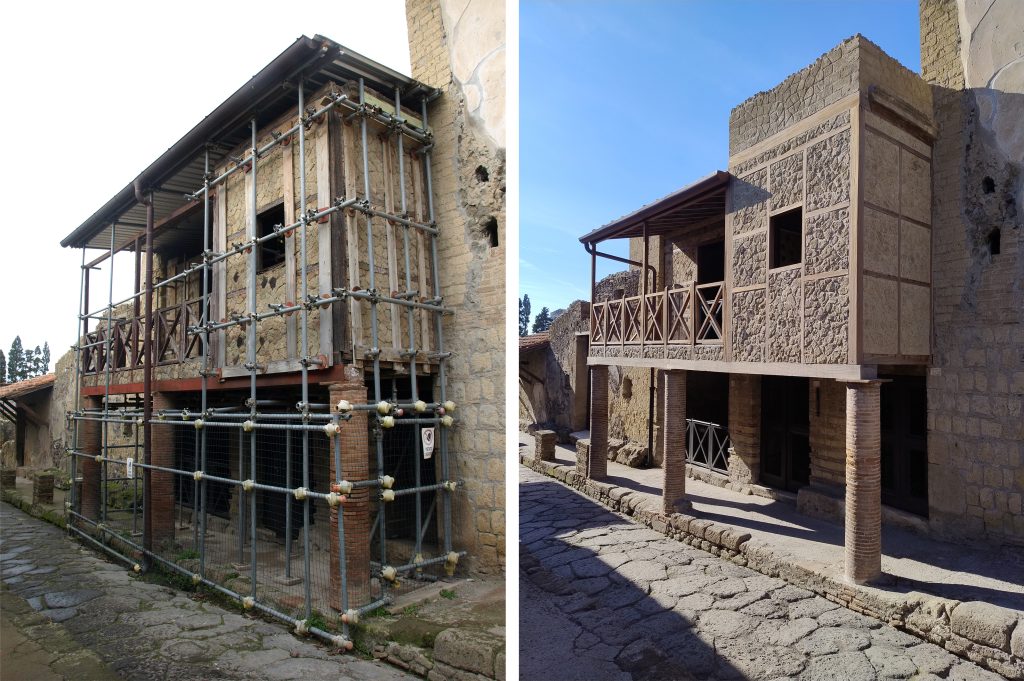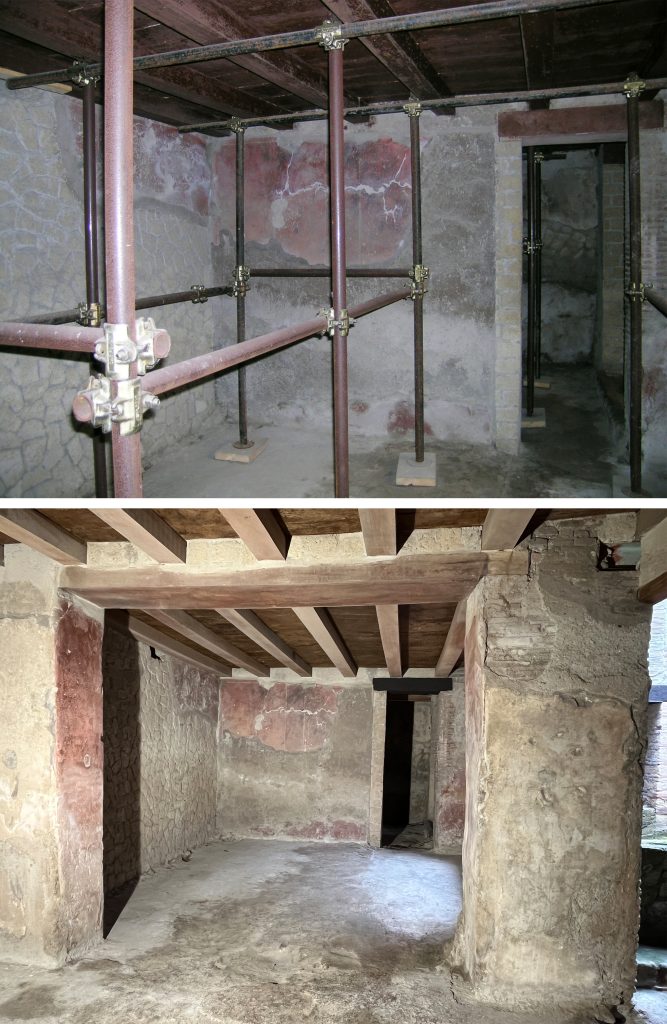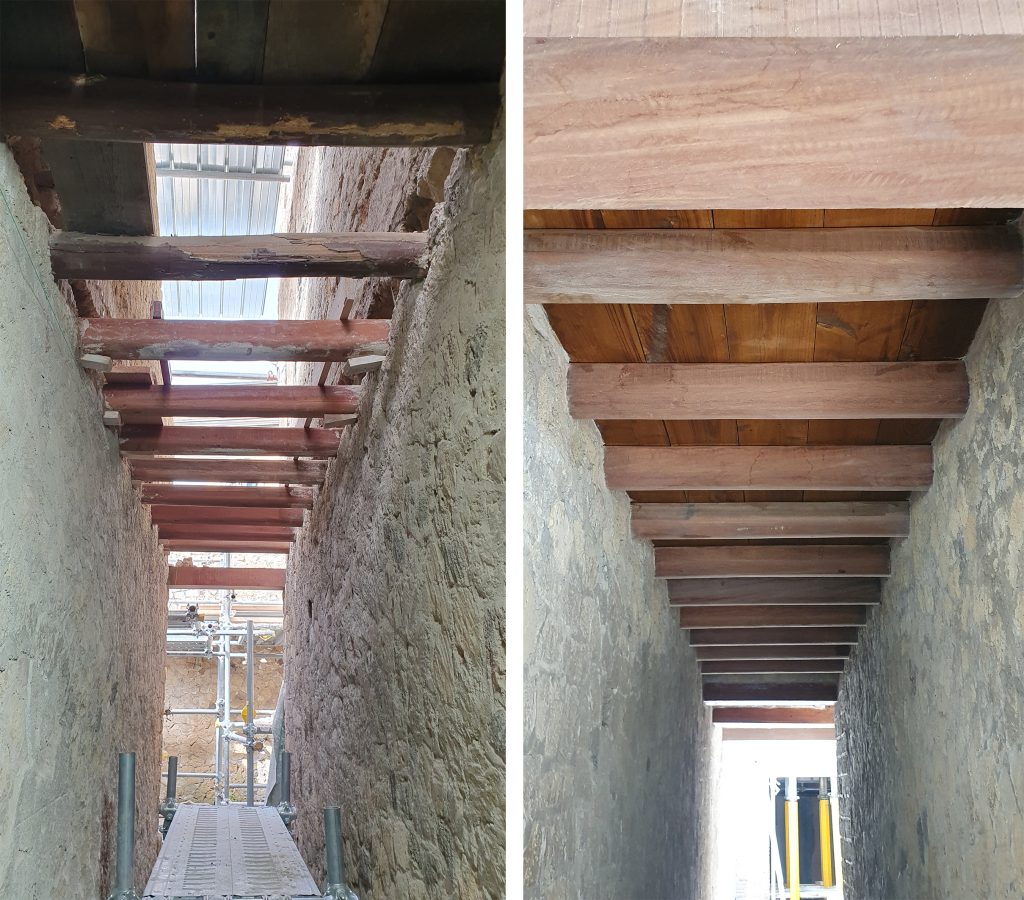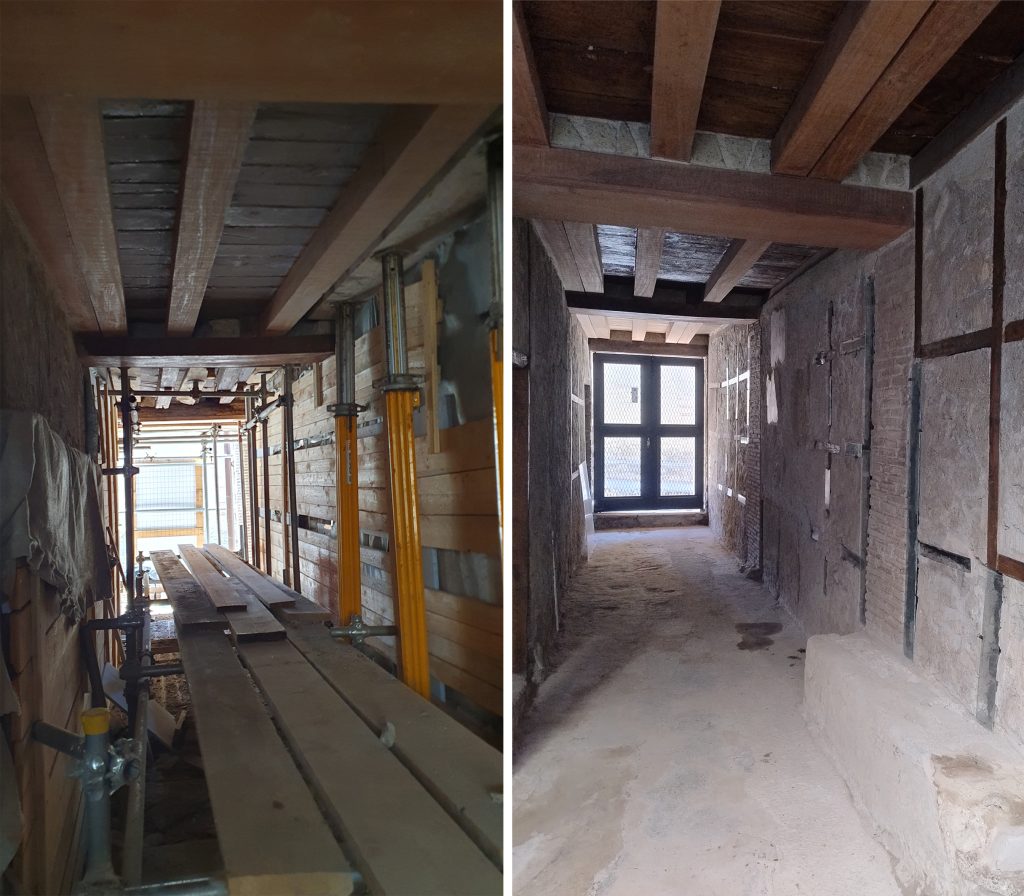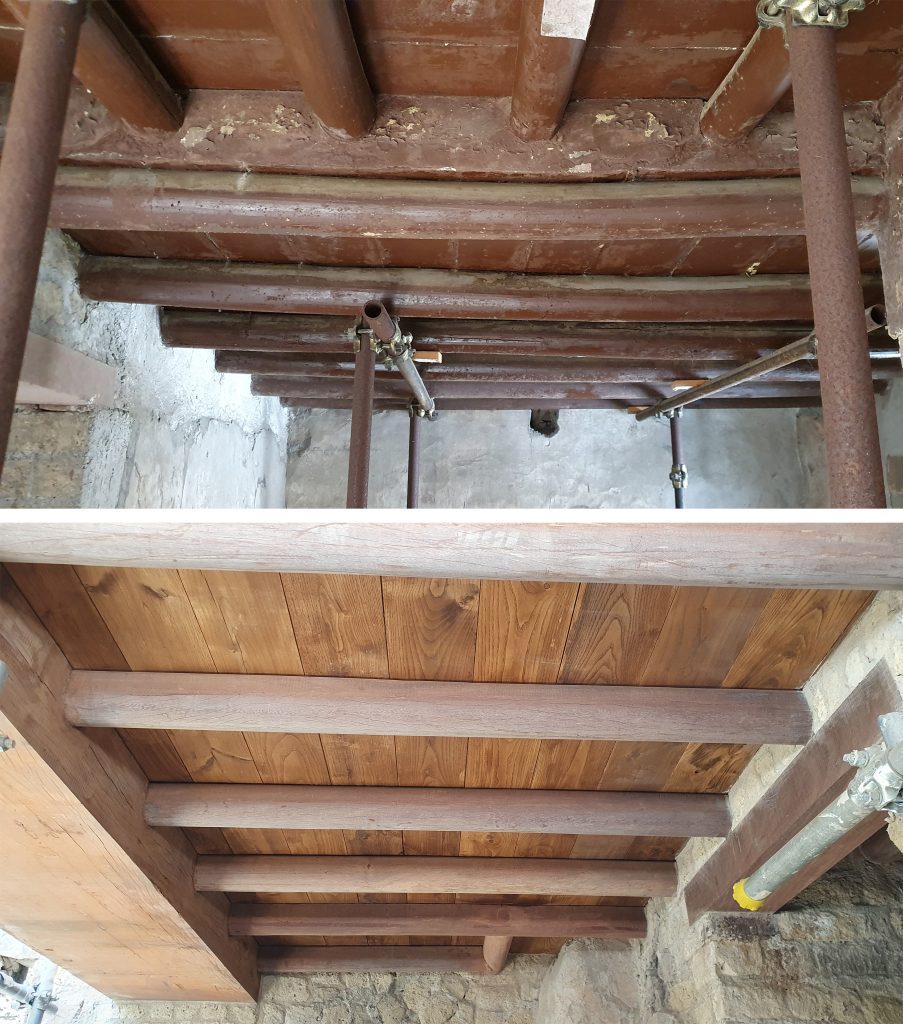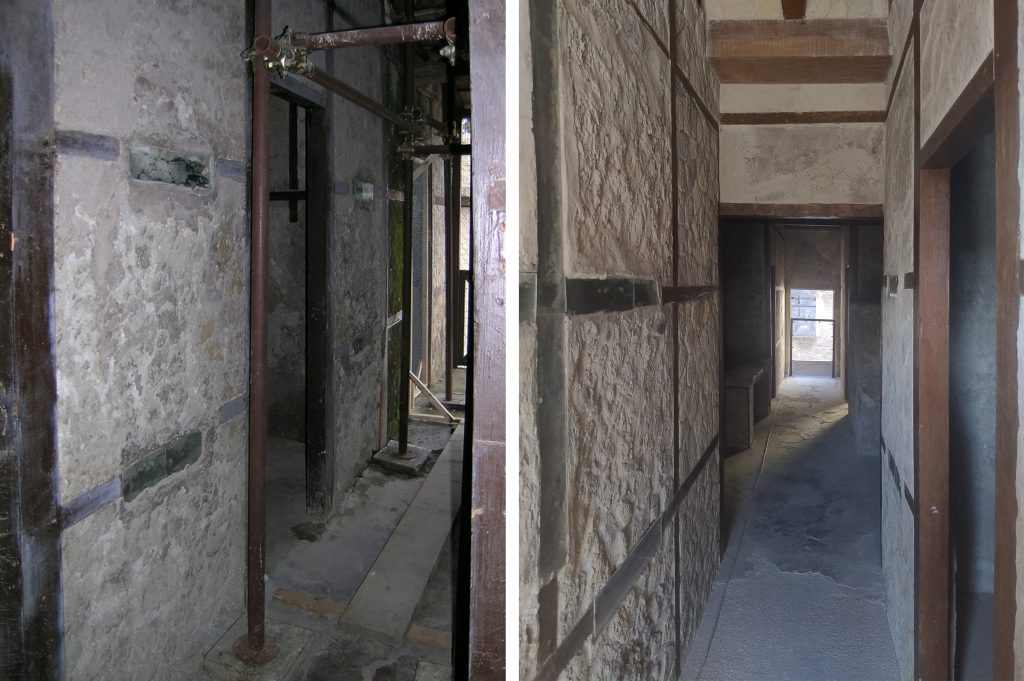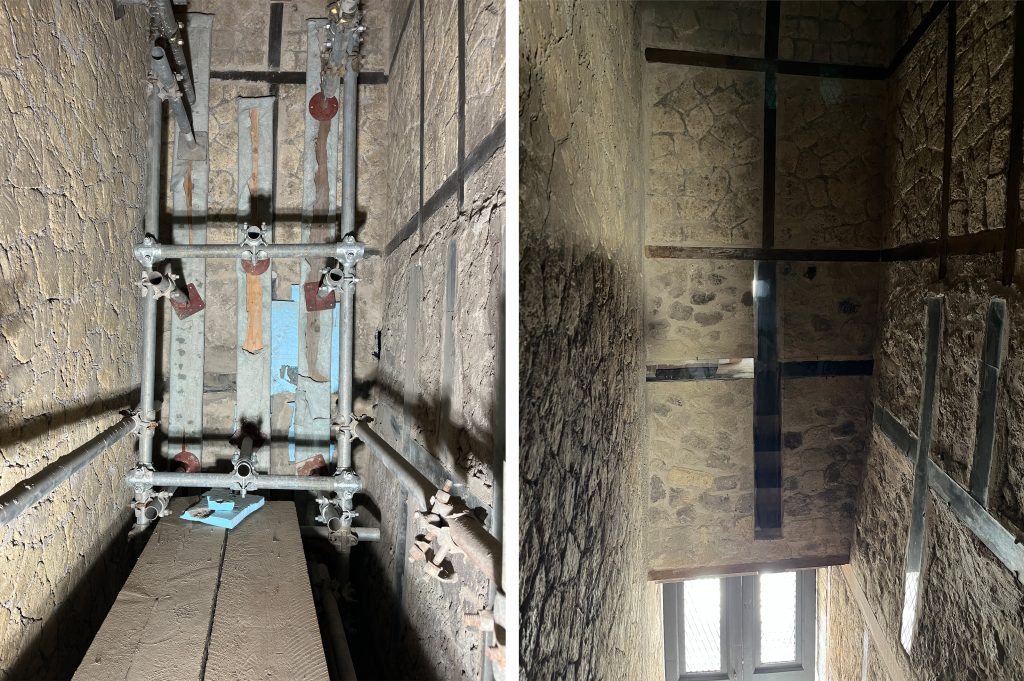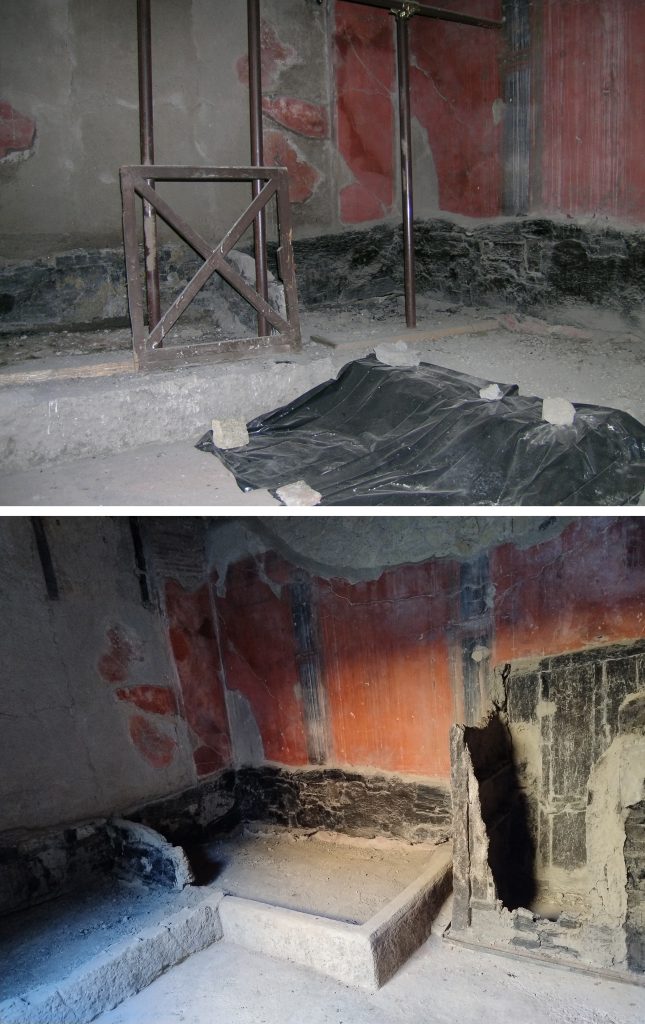


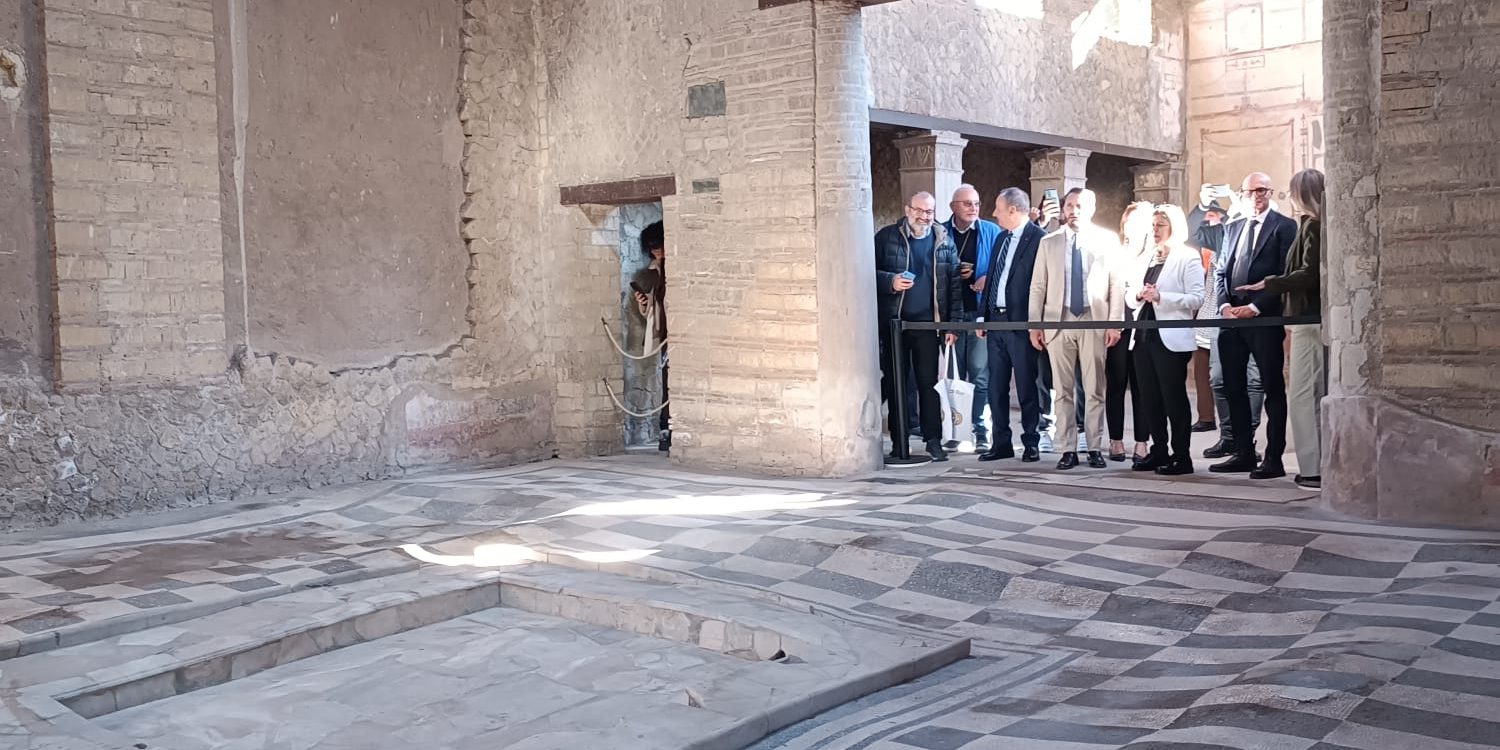
After decades of being closed to the public, the House with the Mosaic Atrium and the Wattle-and-Daub House are once again open to visitors and have been incorporated into the tour route of the Herculaneum Archaeological Park. These two dwellings are very different from one another, yet both are extraordinary in terms of their construction techniques and the wealth of artifacts and decorations they contain, marking a new phase in the Domus Project.
For visitors, the changes are tangible. The two houses offer a glimpse into what life was like in a Roman city two thousand years ago.
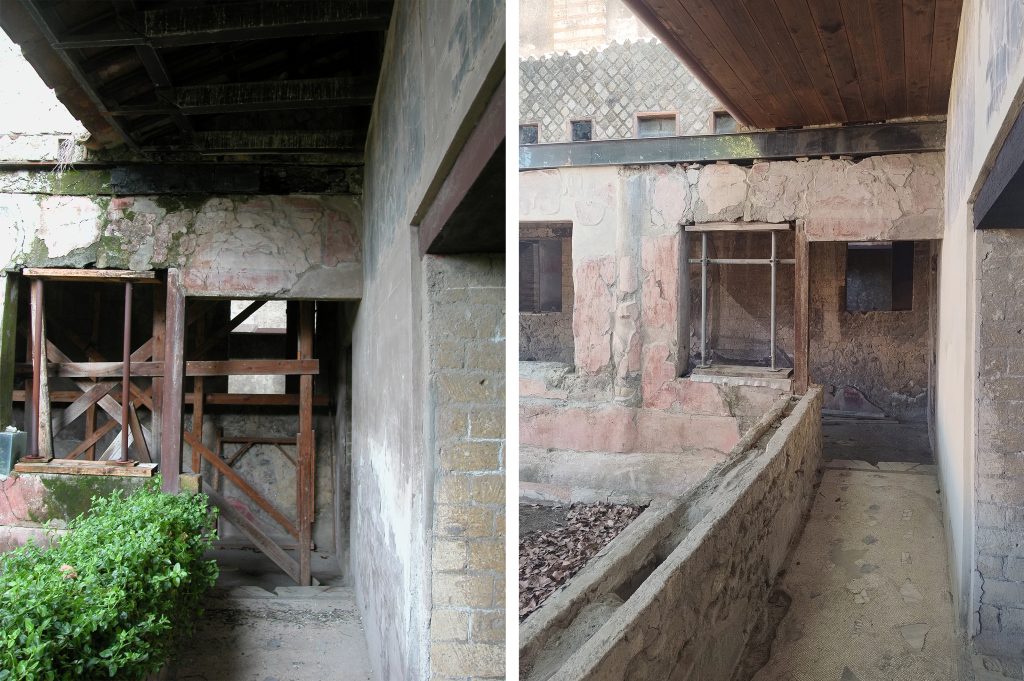
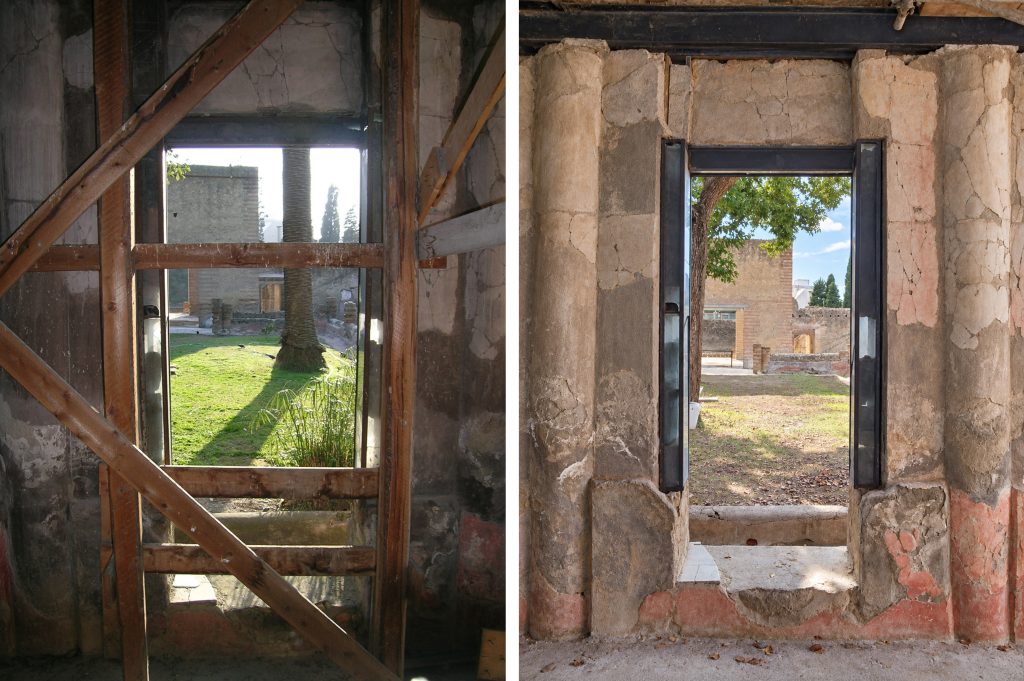
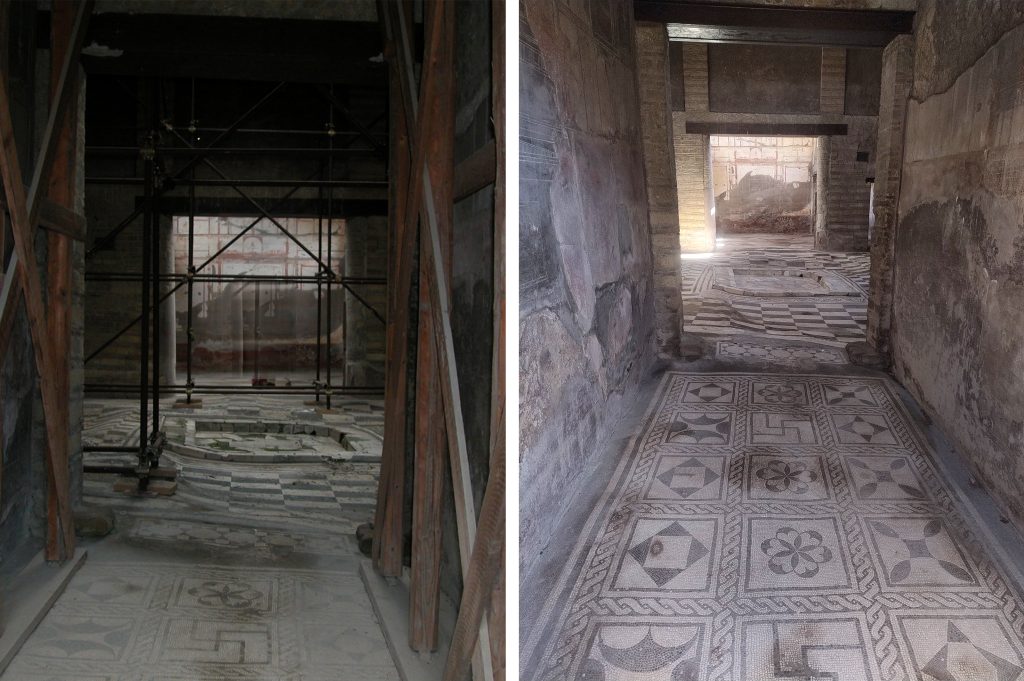
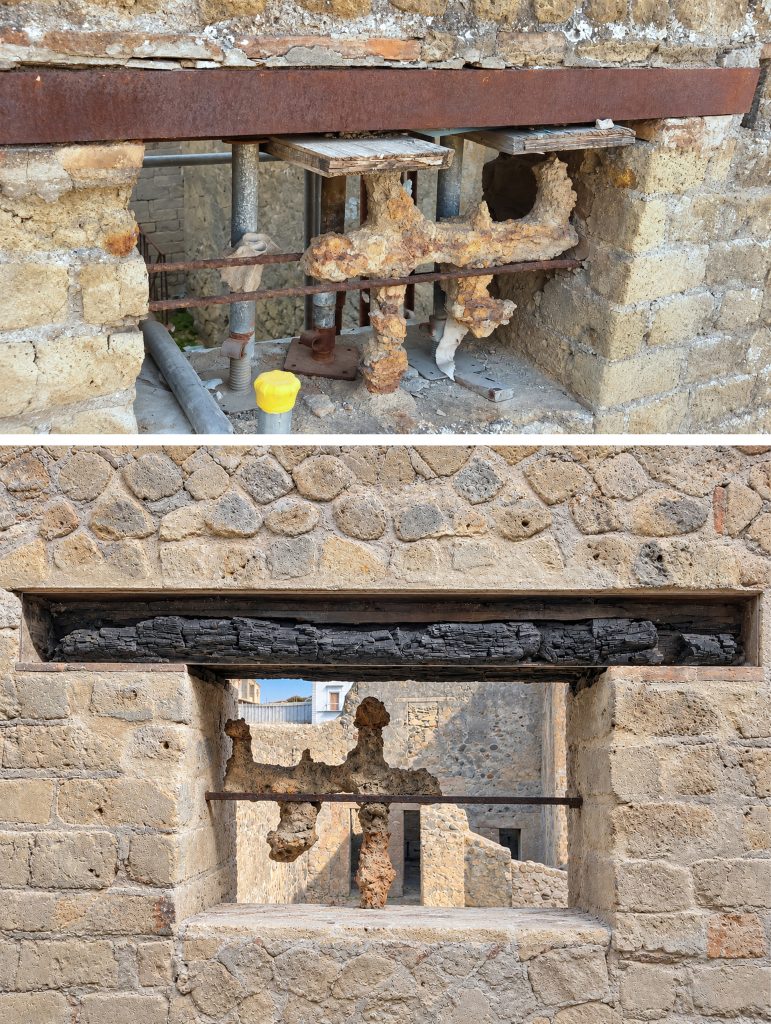
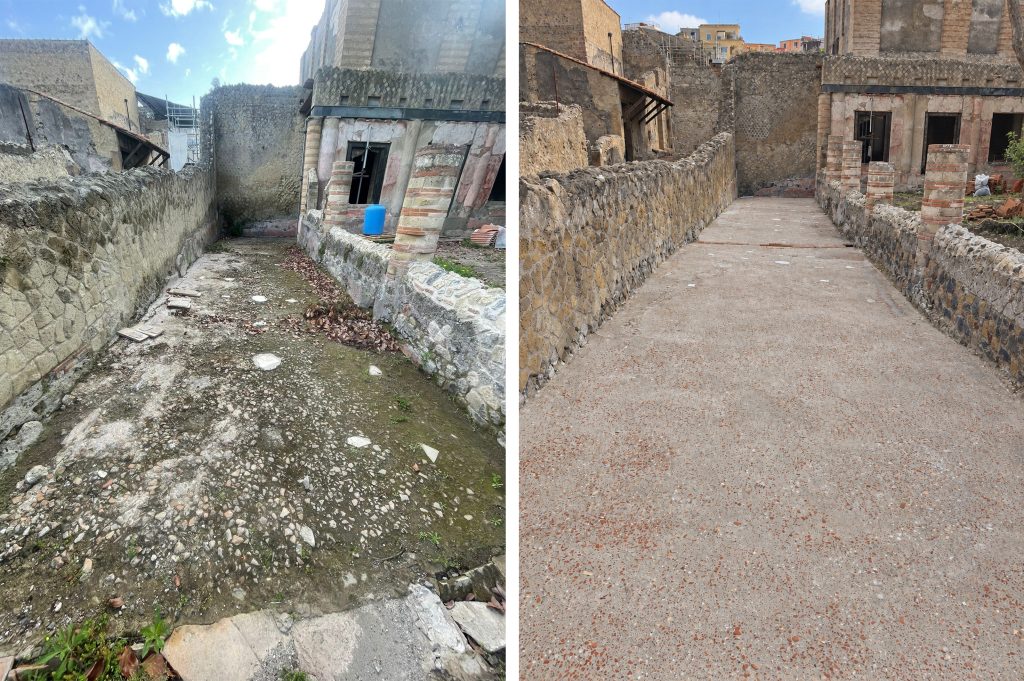
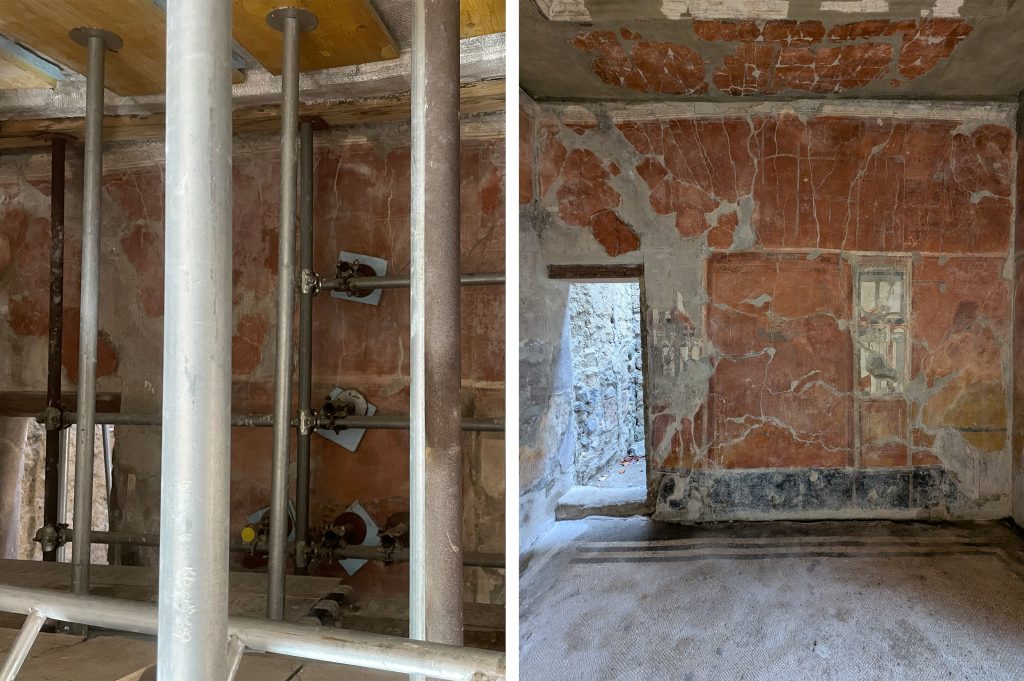
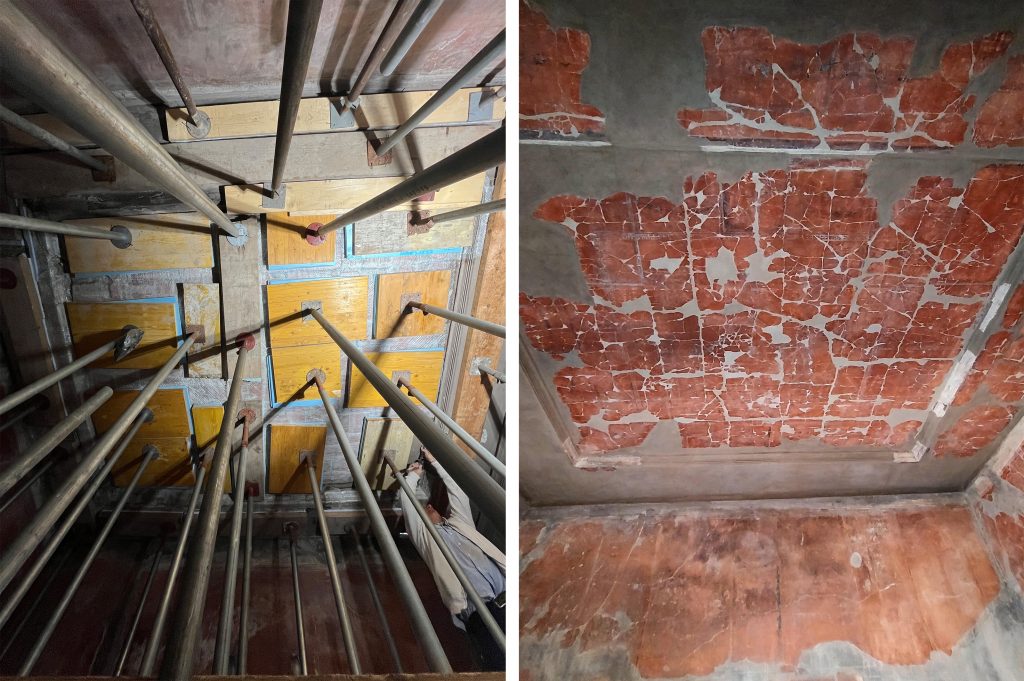
On one side stands the House of the Mosaic Atrium, a spacious and opulent residence overlooking the sea, where the catastrophic effects of the eruption of 79 A.D. are clearly visible not only in the numerous charred wooden elements that have been unearthed, but above all in the striking atrium floor, which bears the marks of the weight of the volcanic material that concealed its beauty for nearly two millennia. You can stroll through the garden and admire the restored rooms that open onto it, rich in precious stucco work and finely decorated suspended ceilings. From the splendid monumental hall, the Oecus Aegyptius, you’ll see the large atrium with its majestic and evocative floor mosaic, from which the house takes its name.
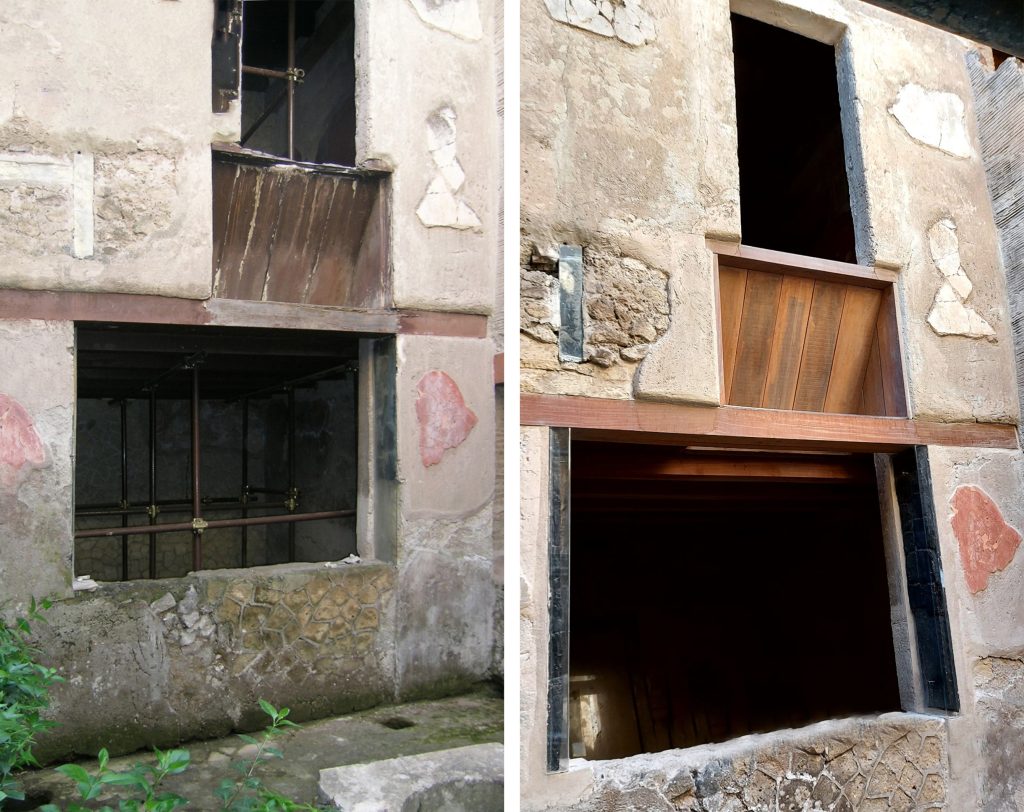
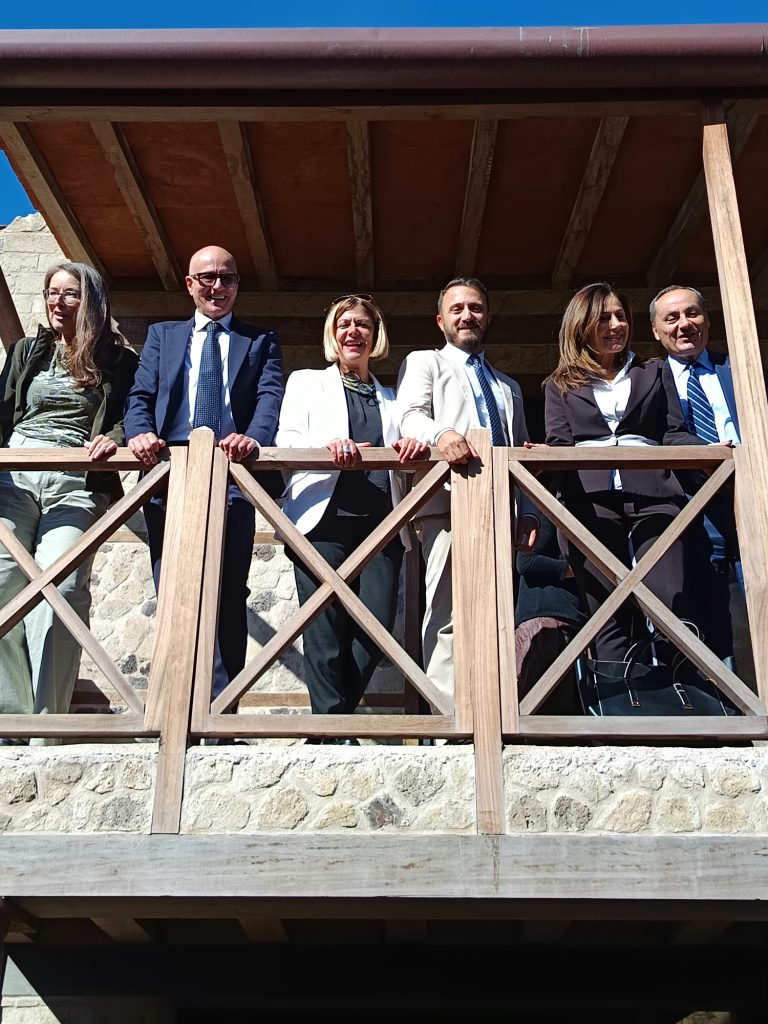
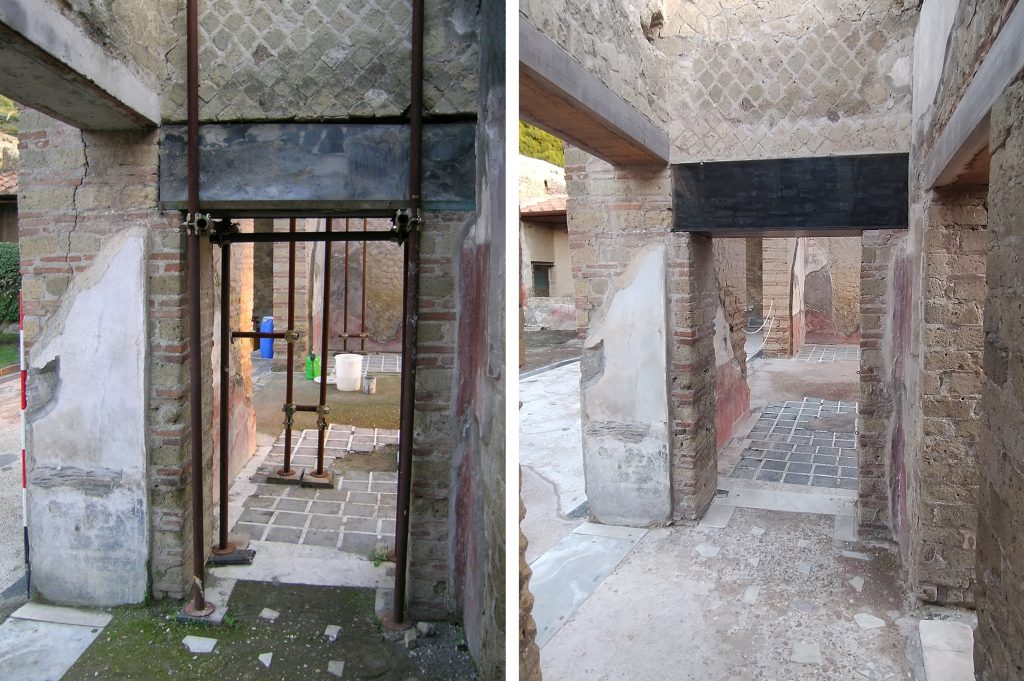
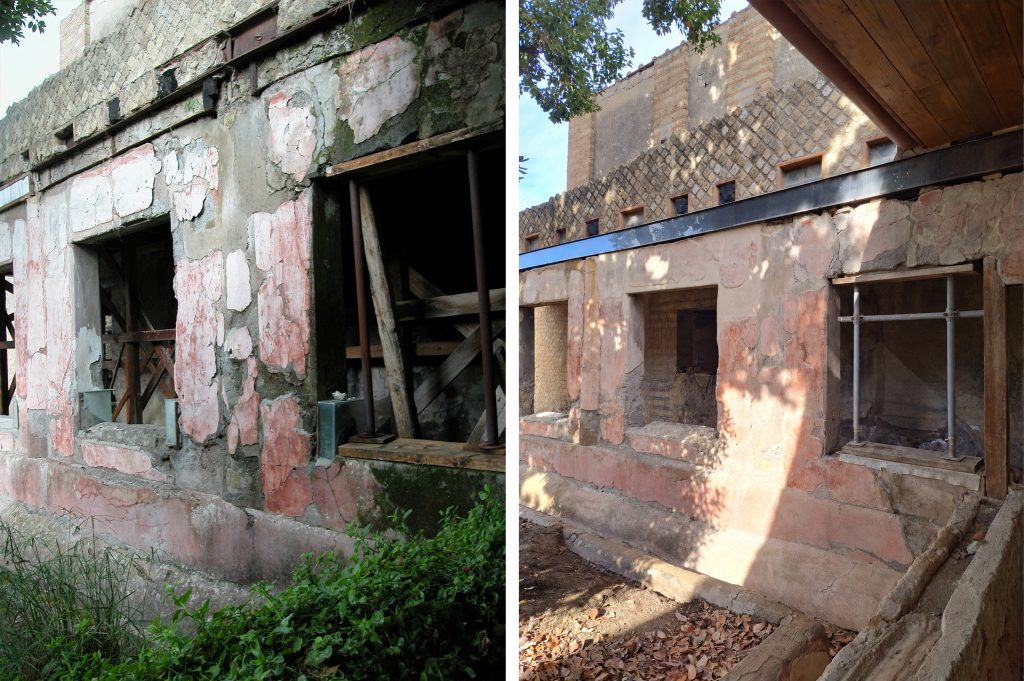
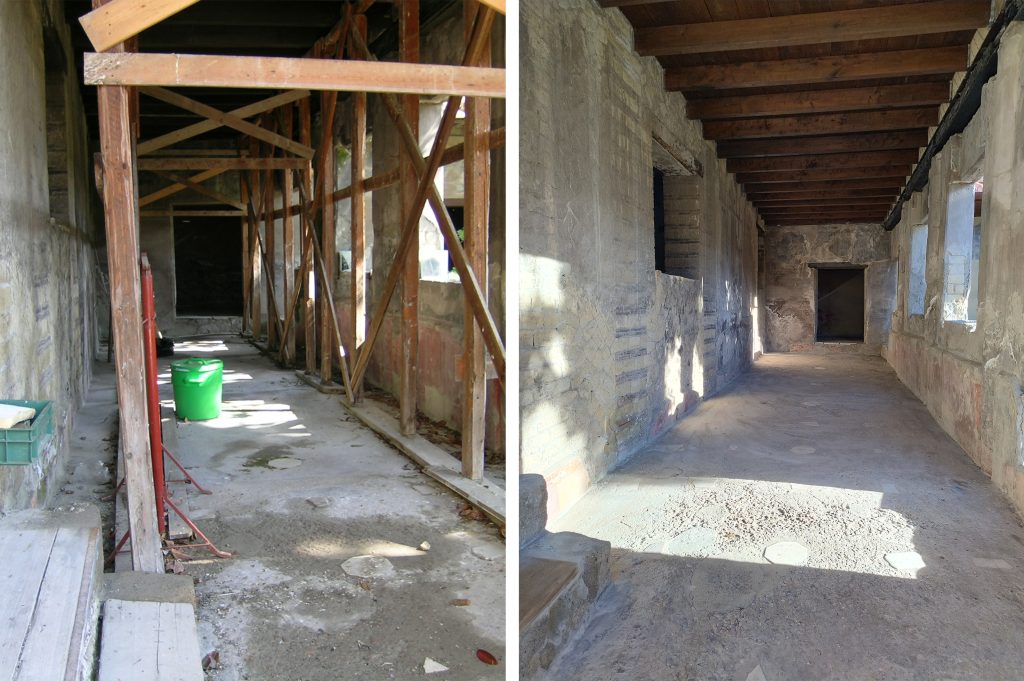
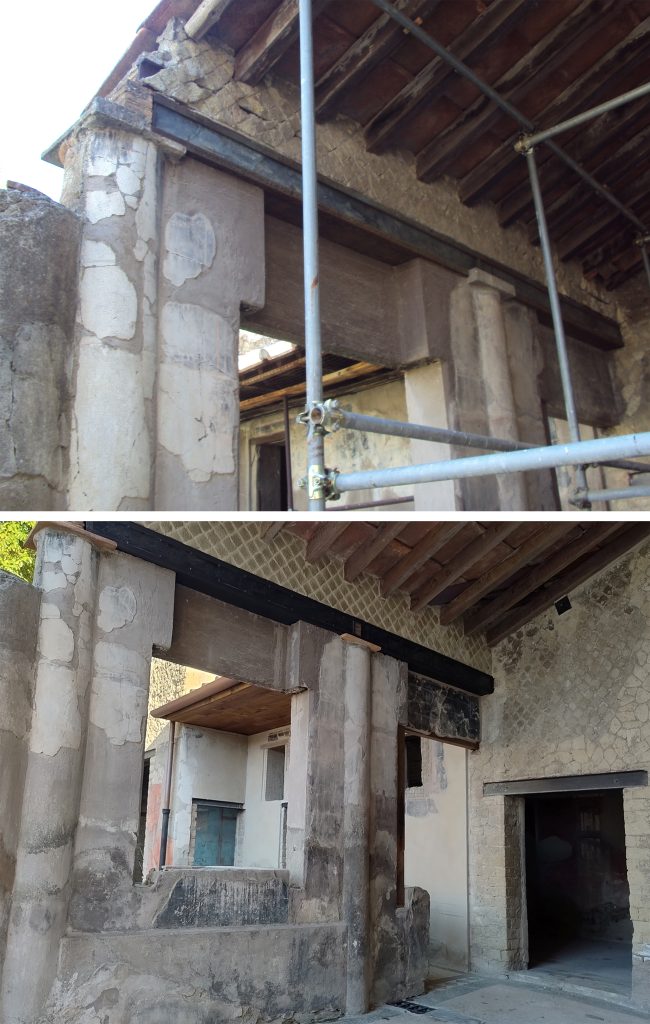
On the other hand, the Casa a Graticcio is a more modest building—a sort of small “apartment building”—with a shop on the ground floor and living quarters on the first floor that still retain their original furnishings. Furthermore, it offers unexpected and entirely new views; it is the first house where the public will be able to access the first floor and admire from above the route along Cardo IV, the ancient Imperial-era road that once led to the sea.
“The reopening of the Mosaic Atrium House and the Wattle-and-Daub House —says Luca Mercuri, Director General of Museums—represents a significant achievement for Herculaneum and a concrete example of the policies for promotion, public engagement, and accessibility that the General Directorate of Museums has developed and promoted in recent years on a national scale.”
The Herculaneum Archaeological Park continues to serve as a model of best practices, successfully combining a focus on maintenance and the planned preservation of cultural heritage with the gradual expansion of opportunities for visitors to explore and learn. The long and fruitful collaboration with the Packard Humanities Institute also demonstrates the value of public-private cooperation based on shared objectives and the continuity of initiatives.
“It is precisely this ability to integrate preservation, research, and accessibility through long-term planning that makes the Herculaneum experience particularly significant for the entire national museum system.”
“Returning two homes that have been closed to the public for decades means opening the doors to places that are extraordinary in terms of their architecture, interior design, and state of preservation. But it also means showcasing a way of working: through the Domus Project, we view these residences as part of a single heritage to be preserved and maintained over time.”
“The reopening does not mark the end of our work; it is a step in an ongoing process of preservation and protection that we are carrying out with the Packard Humanities Institute, thanks to a public-private partnership that has been active in Herculaneum for over twenty-five years,” says Federica Colaiacomo, Director of the Herculaneum Archaeological Park.
With these two reopenings, the program dedicated to six of the site’s most important residences takes another step forward. Launched to restore buildings that had developed numerous problems over the years—including deteriorated roofs, exposure to the elements, and the fragility of the ancient structures— the program has already made it possible to reopen the Casa del Colonnato Tuscanico and the Casa del Sacello di Legno to the public—both reopened in March 2025—as well as the Casa del Mobilio Carbonizzato, which became accessible again in July 2026.
Architect Jane Thompson, who has been in charge of managing the public-private partnership on behalf of the Packard Foundations since its inception in 2001, states: “This involved tackling a major conservation challenge—a long, meticulous, and highly complex undertaking, because here in Herculaneum, for some time now, we have chosen to grapple not only with the ancient remains but also with the restorations carried out during the open-air excavation led by Amedeo Maiuri, whose centennial we will celebrate next year.”
This approach has made it possible to address the most critical issues step by step and, at the same time, to create the conditions for ongoing maintenance of the buildings that have already been restored. Once the safety and preservation standards required for reopening have been met, work will continue on the decorative elements and furnishings that require further restoration. Other activities already included in the Park’s schedule will allow for the gradual completion of the restoration of the houses and the expansion of the areas open to visitors over time.
The Domus Project thus reaffirms the Park’s commitment to conservation that goes beyond a single intervention and continues through maintenance, monitoring, and new phases of work. Reopening sites that have been closed for a long time to the public means enhancing the visitor experience and ensuring that the reopening is part of an ongoing process of care and protection.
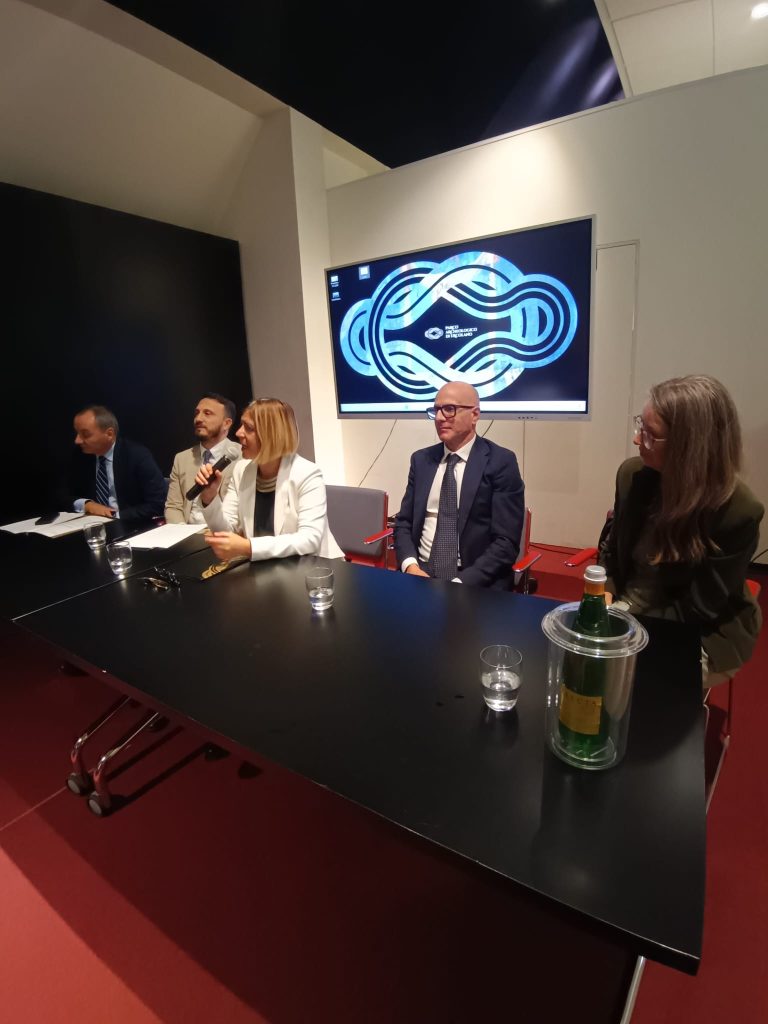
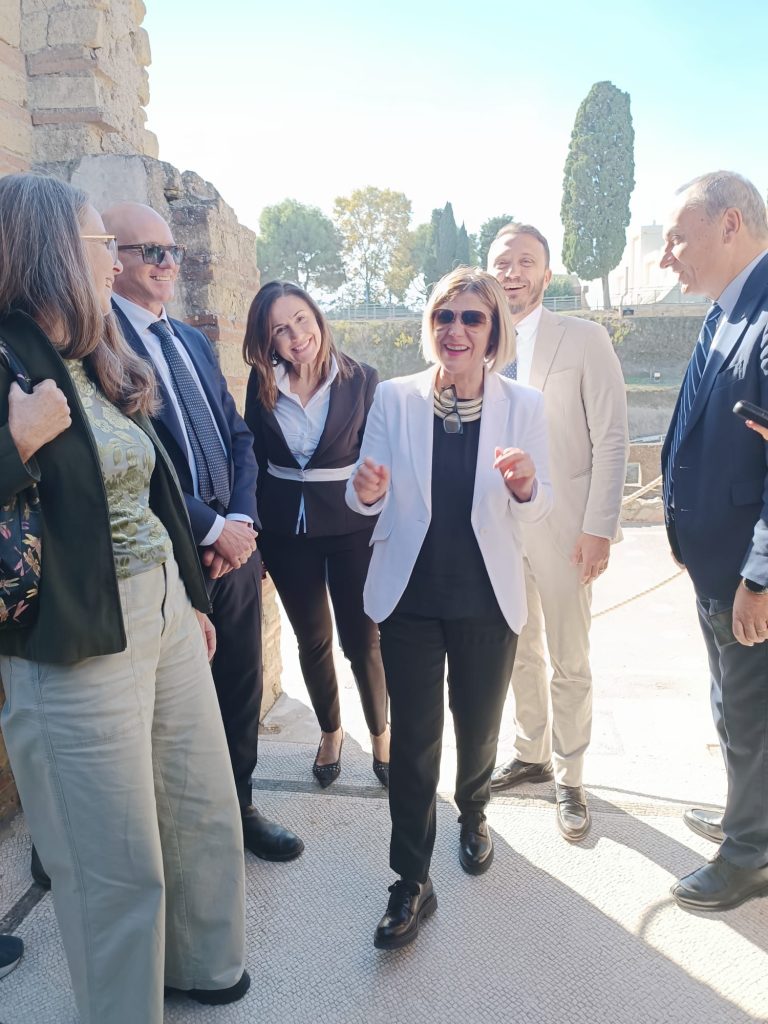
The presentation was hosted by Director Federica Colaiacomo and representatives of the Packard Humanities Institute and its Italian affiliate, the Packard Institute for Cultural Heritage.
Lattice-Style House Fact Sheet
Gallery: Casa dell’Atrio with Mosaics
Gallery: Graticcio House