

Extraordinary finds from the deposits of the Herculaneum Archaeological Park, rarely exhibited to the public, reveal the daily life of the ancient city, preserved from the eruption of 79 AD, including bread baked two thousand years ago and charred by the eruption of Vesuvius, along with food, organic remains, tableware, furniture, and everyday utensils. From July 22, 2026, Castel Sant’Angelo will open its monumental rooms to Herculaneum: The Art of Living , the exhibition that leads the visitor to discover the Vesuvian city, frozen in time by the eruption of Vesuvius.
The exhibition is curated by Massimo Osanna, Head of the Cultural Activities Department at the Ministry of Culture; Federica Colaiacomo, Director of the Archaeological Park of Herculaneum; Luca Mercuri, Director of the Pantheon and Castel Sant’Angelo Institute – Directorate of National Museums of the City of Rome; and Francesco Sirano, Director of the National Archaeological Museum of Naples.
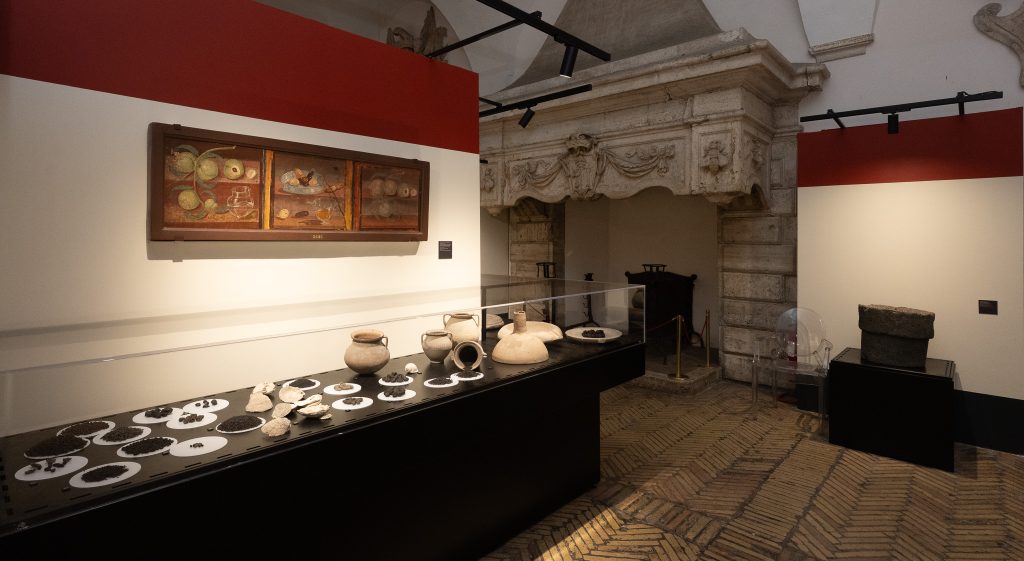
The project stems from a successful collaboration between Castel Sant’Angelo and the Archaeological Park of Herculaneum. The exhibition experience From egg to apples. La civiltà del cibo e i piaceri della tavola a Ercolano , first presented in the frescoed halls of Villa Campolieto in Herculaneum, serves as the starting point for a new exhibition project completely reimagined for the monumental spaces of the Mole Adriana. The exhibition, organized into seven sections, significantly expands the narrative—extending it from the theme of food to the daily life of ancient Herculaneum—and is enriched by a selection of over 70 artifacts, many of which were previously held in the Archaeological Park’s storerooms and are being presented to the public for the first time as part of this exhibition.
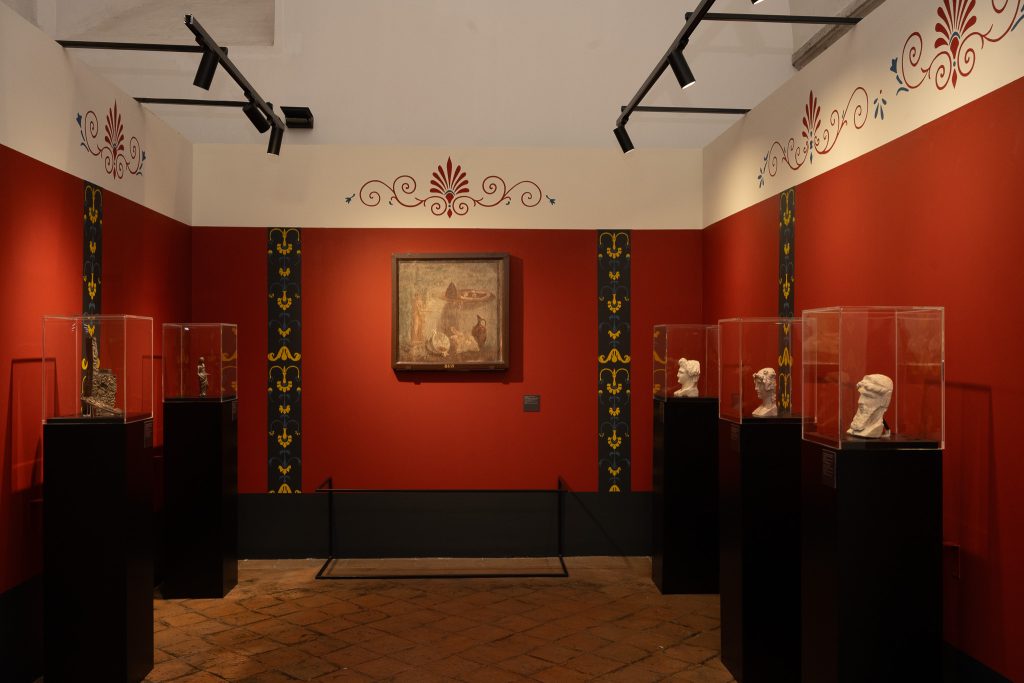
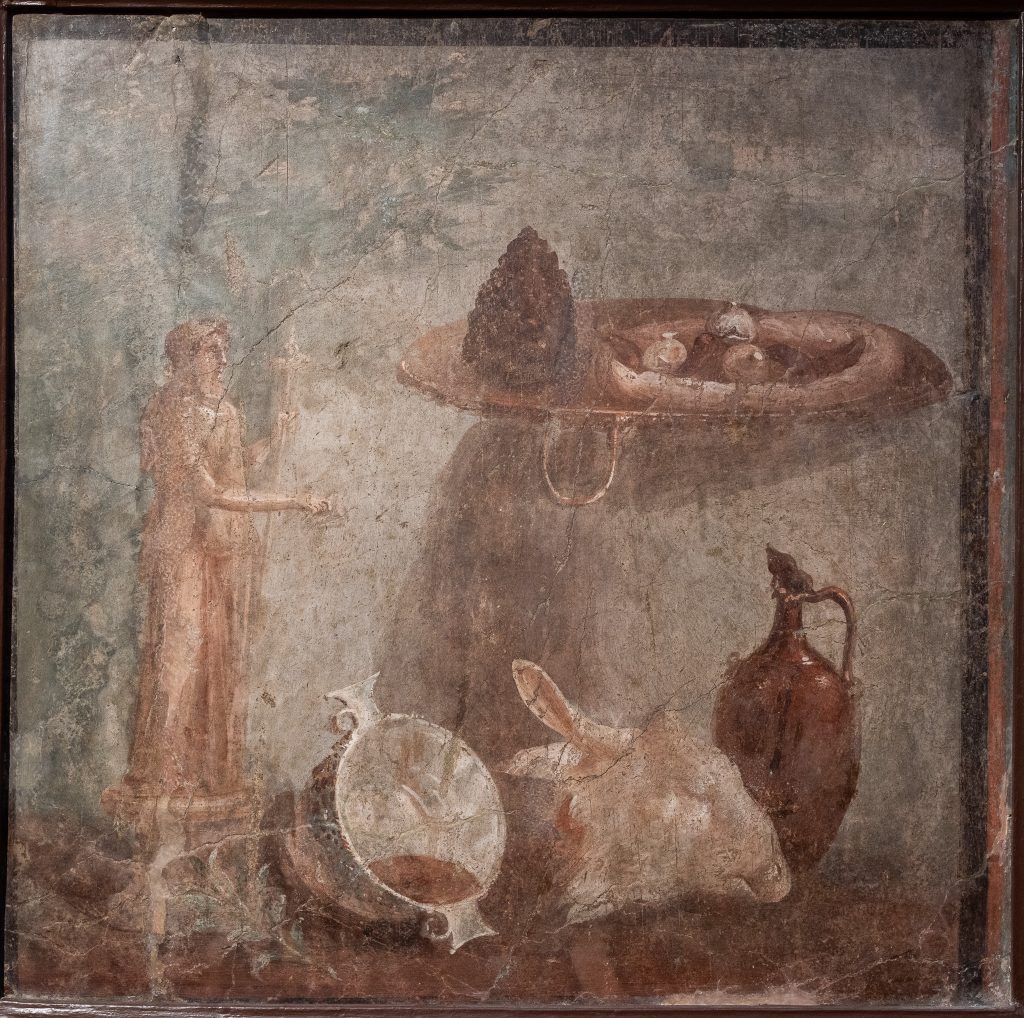
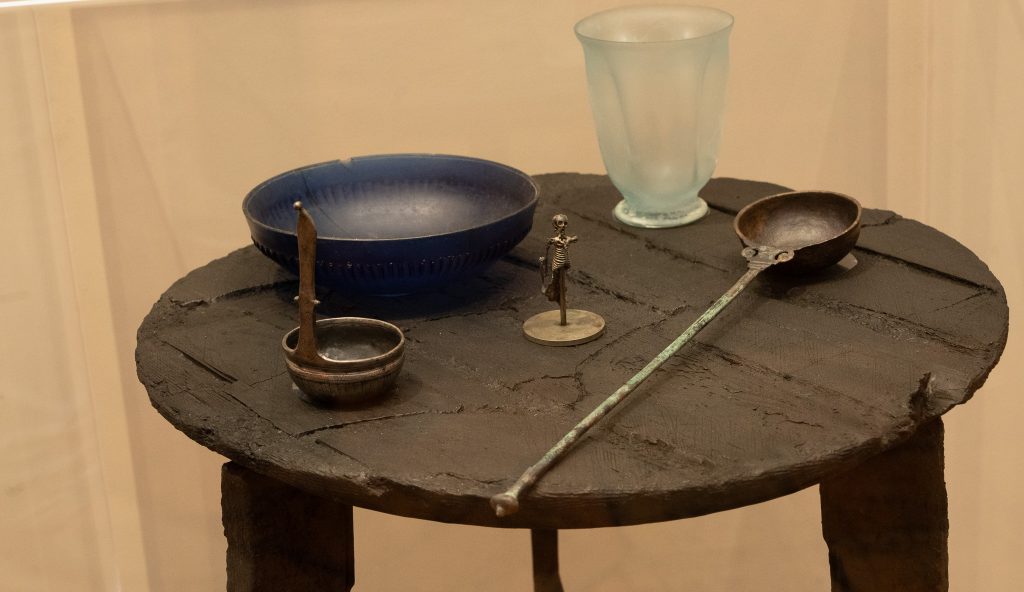
The exhibition opens with an extraordinary *Wunderkammer*—a “cabinet of curiosities”—inspired by famous Renaissance collections. It brings together 42 exceptionally valuable artifacts from the storerooms of the Archaeological Park of Herculaneum: statues, busts, frescoes, jewelry, and everyday objects that reveal the artistic sophistication, cultural level, and quality of life in the ancient city on the eve of the catastrophe. As with the original cabinets of curiosities, the aim is not merely to display, but to evoke a sense of wonder.
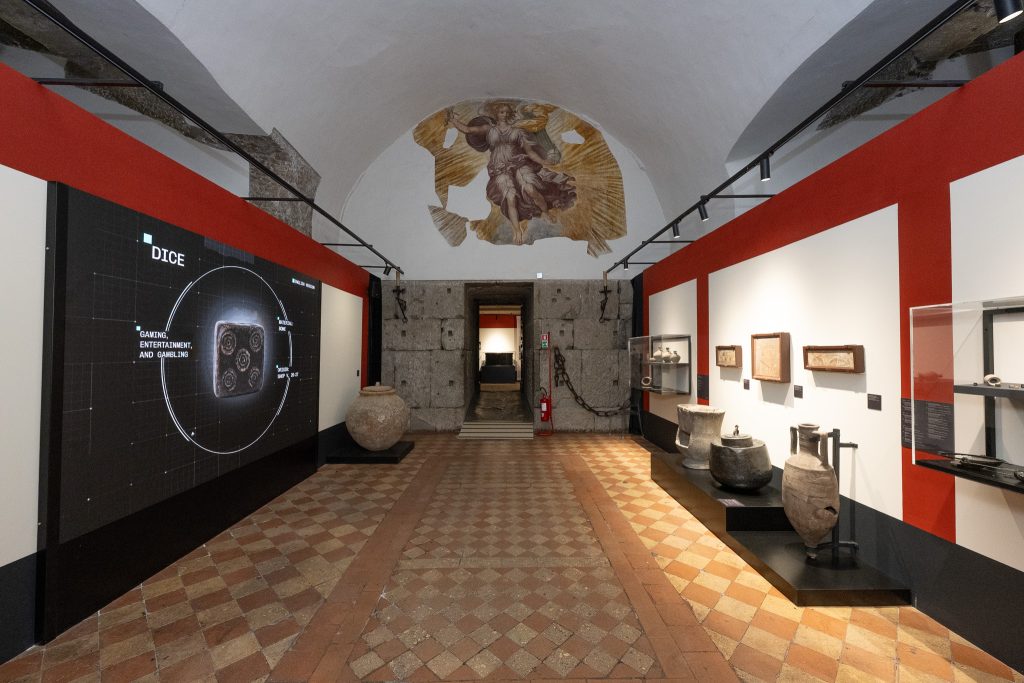
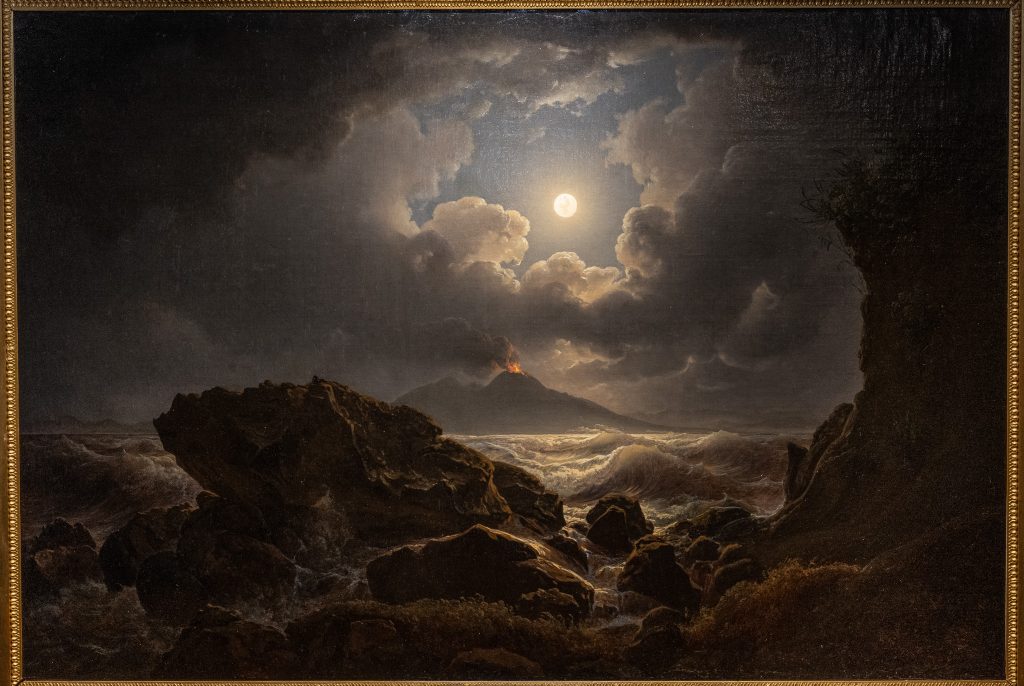
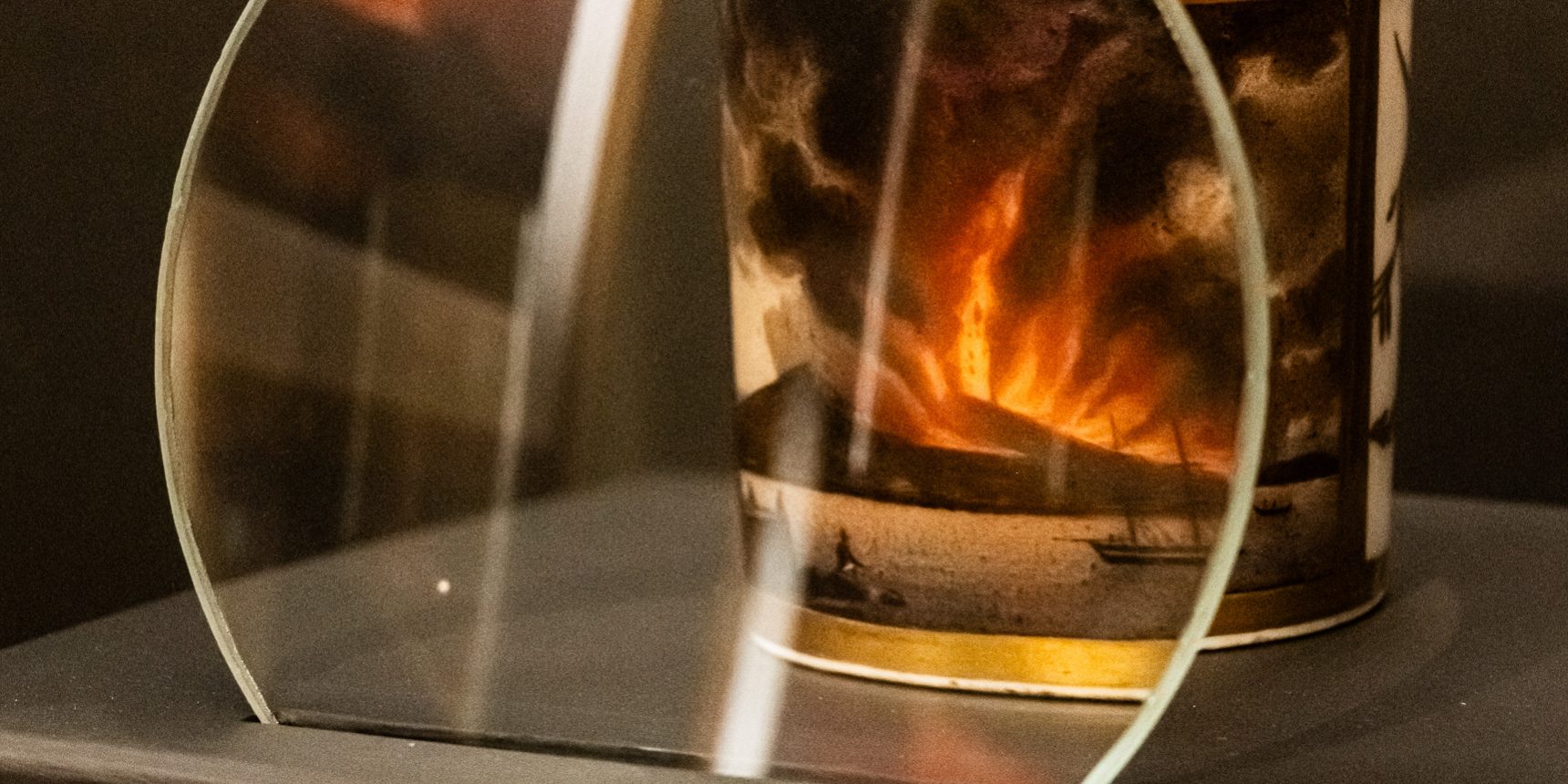
The visitor then enters the heart of the event that shaped the destiny of Herculaneum: an immersive room dedicated to the eruption of Vesuvius, featuring audiovisual content, paintings, prints, and decorative arts that document how the image of the volcano was constructed during the era of the Grand Tour. Alongside the tradition made famous by Pierre-Jacques Volaire, works such as the tempera painting by Giacomo and Antonio Baseggio (1784), Joseph Rebell’s *Moonlit Storm in the Bay of Naples* (1822), and a rare piece of porcelain from the Poulard Prad manufactory evoke the allure of the sublime that drew travelers, artists, and scholars from across Europe to Naples.
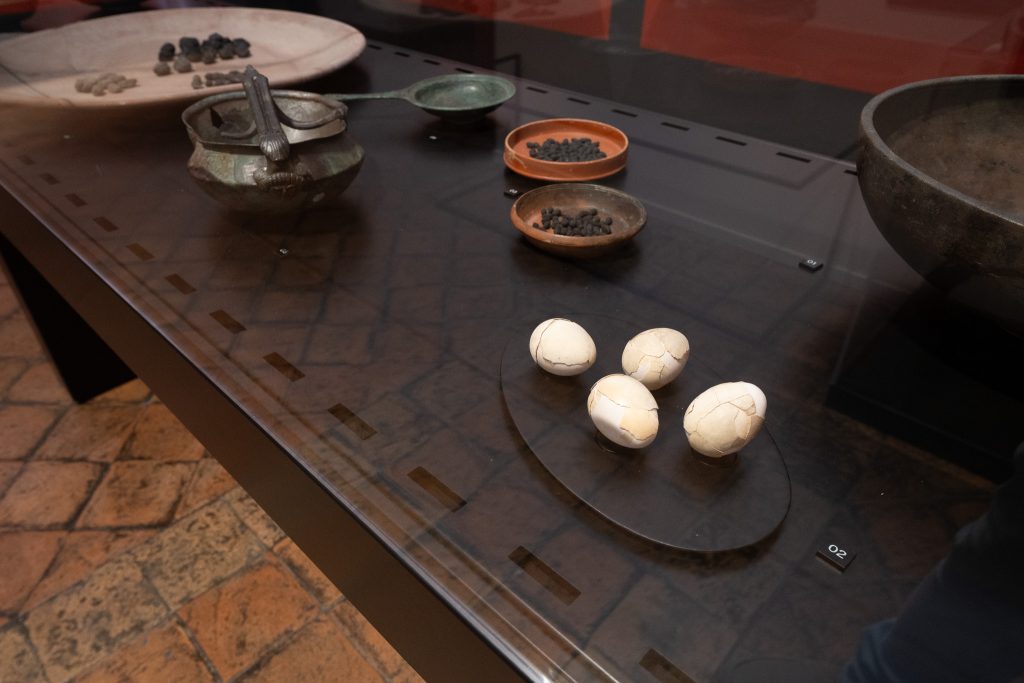
From myth to the street: the exhibition then reconstructs the living city—using audiovisual installations and archaeological artifacts—featuring its shops and *thermopolia*, establishments dedicated to selling food and drink ready for daily consumption. Among the most remarkable finds are loaves of bread—carbonized by the eruption yet preserved intact—identical to those depicted in the famous Pompeian fresco showing the distribution of bread, as well as baking pans from the bakery of Sextus Patulcius Felix, part of a set of 25 molds discovered in Herculaneum. The exhibition path then leads into the intimate spaces of the *domus*, specifically the kitchen and pantry: mortars, pots, saucepans, and precious organic remains—cereals and legumes recovered during excavations—document the daily diet of the ancient inhabitants of Herculaneum with rare precision.
The narrative continues with wine—one of the most thriving economic activities of ancient Campania; Pliny the Elder hailed Falernian as one of the most renowned wines of his day—which also served as a bridge to the divine in the worship of Bacchus, the god of the vine, fertility, and ritual intoxication. The grand finale takes place in the banquet hall, where a marble sundial marks the three stages of ancient dining—*ientaculum*, *prandium*, and *cena*—amidst bronze bells and vessels of glass, bronze, and silver. Here, too, is perhaps the exhibition’s most distinctive object: the *larva convivialis*, a small skeletal figurine that, placed upon the table, reminded diners of the brevity of life and—following the teachings of Epicurus—invited them to savor the pleasures of the feast.
The choice of Castel Sant’Angelo as the exhibition venue holds special significance. The monument—an emblem of Rome’s historical layering, spanning its roles as imperial mausoleum, fortress, papal residence, and museum—offers an opportunity for a dialogue between two vastly different sites united by their shared ability to preserve extraordinary traces of the past, each in its own unique way.
The exhibition guides visitors through this exceptional heritage by fostering a dialogue between archaeological artifacts, multimedia installations, and immersive settings. The pyroclastic flow that struck Herculaneum in 79 AD preserved buildings, objects, food, and organic materials, transforming a catastrophe into an extraordinary source of knowledge and providing a unique record of dietary habits, work activities, personal care, and social relations in the ancient Roman world.
“With this initiative,” comments Luca Mercuri—Director of the Pantheon and Castel Sant’Angelo (National Museums Directorate of the City of Rome) and curator of the exhibition—”Castel Sant’Angelo reaffirms its role as a meeting point for diverse forms of heritage, institutions, and audiences. This exhibition stems from a collaboration demonstrating how dialogue between museums can generate high-quality cultural projects capable of broadening opportunities for learning and showcasing heritage through new visitor itineraries. It is a source of particular satisfaction for Castel Sant’Angelo to bring to life an exhibition project that connects two institutions of extraordinary value and offers visitors a rich, original cultural experience. Furthermore, it is part of an increasingly broad and diverse cultural program that, through exhibitions, events, and initiatives, confirms the Castle as a vibrant venue open to dialogue across different eras, artistic languages, and audiences.”
“Herculaneum, like Pompeii, offers extraordinary insight into the life of a Roman city,” comments Massimo Osanna, Head of the Department for Cultural Activities and curator of the exhibition. “The unique preservation conditions resulting from the eruption of 79 AD have safeguarded buildings, furnishings, and everyday objects, making it possible to reconstruct the activities, dietary habits, and social customs of its inhabitants. The exhibition showcases this heritage through the findings of the latest research, offering the public new tools to understand Roman society and daily life. Bringing this story to Rome expands opportunities to learn about a unique archaeological site and reaffirms the role of museums as spaces for research, dialogue, and engagement.”
“Bringing Herculaneum to Castel Sant’Angelo means taking the ancient city on an almost natural journey,” comments Federica Colaiacomo, Director of the Herculaneum Archaeological Park and curator of the exhibition. “These are two places that history buried under different layers—one of ash and lava, the other of continuous functional changes and transformations—and which today are once again telling their stories to one another. In this exhibition, we wanted to present not just monuments to the public, but life itself: the daily gestures, the flavors, and the everyday objects that make Herculaneum one of the most intimate and vivid testaments to the ancient world.”
“This project stems from the dialogue between our institutions, and I wish to express my heartfelt thanks for making it possible. Special thanks go to PHI for their invaluable and ongoing collaboration—which has also supported this journey through the content of the *Ercolano Digitale* project—and to the entire staff of the Herculaneum Archaeological Park, whose expertise, enthusiasm, and constant willingness to engage have enabled every aspect of this partnership. Bringing an authentic piece of the ancient inhabitants’ art of living to Rome—to the very heart of the capital—is the result of a shared commitment and a common vision.”
“Herculaneum is an extraordinary open-air laboratory,” declares Francesco Sirano, Director of the National Archaeological Museum of Naples and curator of the exhibition. “The richness of the materials unearthed, combined with the quantity and variety of the preserved evidence, sheds exceptional light on the subject of food in the ancient world. I am certain that the study of Herculaneum—the site where systematic Western archaeology began—will also enable us to gain deeper insight into and a better understanding of many of the artifacts housed in the National Archaeological Museum of Naples. Herculaneum thus continues to be an inexhaustible source of knowledge and may well yield new and significant discoveries in the future.”
“‘Herculaneum: The Art of Living’,” comments Alfonsina Russo, Head of the Department for the Enhancement of Cultural Heritage, “represents a concrete example of how collaboration between Ministry of Culture institutions can generate projects of high scientific caliber while simultaneously reaching ever-wider audiences. The circulation of artworks, the sharing of expertise, and dialogue among museums strengthen the National Museum System, creating new opportunities for learning and showcasing heritage through shared networks and itineraries. This is the direction in which we intend to continue investing: an approach to heritage enhancement that connects places, collections, and people, thereby expanding accessibility and cultural participation.”