



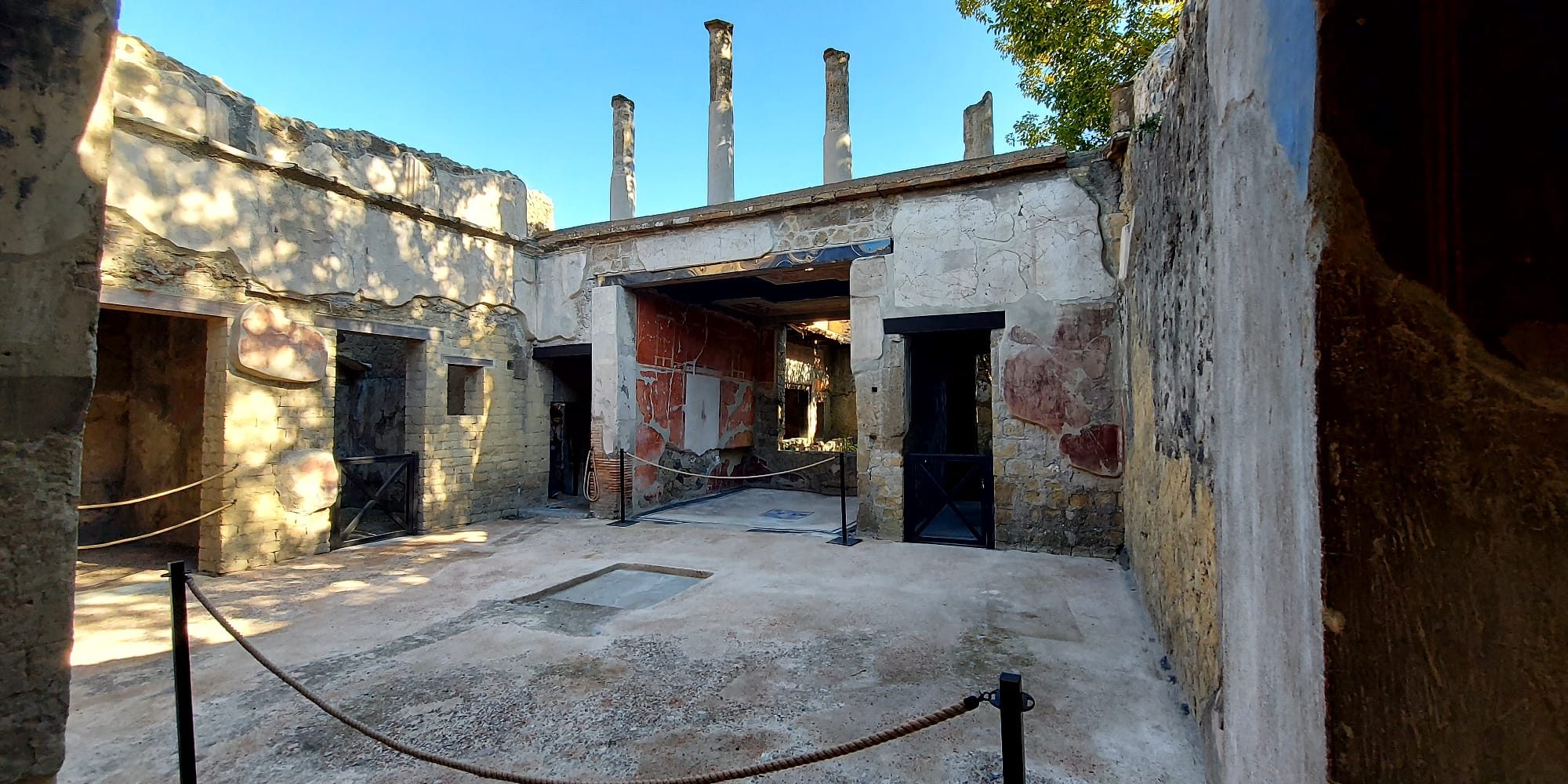
From July 9, one of the most evocative domus in the Archaeological Park can be visited again, returned to the city thanks to a complex restoration project
There is a house, in Herculaneum, that for almost thirty years has kept its secrets in silence, closed to the eyes of visitors but alive in the memory of those who work every day to protect this extraordinary UNESCO site. From Thursday, July 9, 2026, that silence is interrupted: the Casa del Mobilio Carbonizzato reopens to the public, returning to Herculaneum one of its most intimate and touching environments. But the story is just at the beginning: this reopening is only the first chapter of a new season of discoveries. The countdown for the fall of 2026 has already started, when other extraordinary domus of the Archaeological Park will return to tell the public, in a succession of reopenings that promises to rewrite once again the map of the ancient Herculaneum.
The name of this domus already tells a story that moves: it owes its identity to the discovery of a table and a bed with a high back, which still preserved traces of fabric and the remains of the rope net to which the wooden slats were hooked. Objects of daily life, surprised by the eruption and guarded by time, brought to light between 1932 and 1933 during the great season of excavations led by Amedeo Maiuri, the great archaeologist who more than any other has returned to the world the face of ancient Herculaneum.
Crossing the threshold of this house, built in the republican era, means crossing a domestic system that has been preserved with extraordinary consistency: the rooms are arranged around the atrium and the garden at the bottom, where a small larario in the shape of a temple welcomed the devotions of the family. Upstairs, a loggia with columns overlooked the atrium from the first construction phase of the house, while the walls, decorated in the Fourth Style, tell the signs of several phases of life and renovation of the house.
Among the most precious rooms, the triclinic to the right of the entrance preserves a mosaic floor with a refined marble emblem and decorations with still lifes; the tabline in turn houses a mosaic with marble insert and traces of the ancient frescoed ceiling. And right at the back of the house, in the so-called oecus Cyzicenus, opened by a large window on the garden, the charred furniture that gave the name to this domus were found: a table and a bed, silent witnesses of a life interrupted in a moment, almost two thousand years ago.
«To bring to light and return the House of Carbonized Furniture to the city, after almost thirty years of closure, is a goal that concerns us deeply. We are not just talking about the recovery of an architectural space, but about the restitution of a human history made of daily gestures – a bed, a table – that the eruption has frozen over time and that today, thanks to a long and patient restoration work, we can finally tell again. It is the tangible sign of a strategy of protection that looks far, based on the daily care and long-term planning of our heritage.»
Federica Colaiacomo, Director of the Herculaneum Archaeological Park
A long and patient restoration
The reopening of the Carbonized Furniture House is the result of a restoration path started more than 10 years ago, when the first urgent works of reconstruction of the roofs and the security of the decorated surfaces were carried out, as part of the public-private partnership between the Archaeological Park of Herculaneum and the Packard Humanities Institute (PHI), which operates through the Packard Institute for Cultural Heritage (IPBC), active in Herculaneum for twenty-five years.
The architect PHI-IPBC Rossella Di Lauro tells “The most recent interventions represent the natural continuation of the first works. At this stage, we have prioritized unresolved critical issues, Such as the reconstruction of some wooden floors, the replacement of compromised architraves, the consolidation and complete restoration of the columns overlooking the atrium located on the first floor above the roof of the tablino. This last intervention, in particular, was carried out thanks to accurate three-dimensional surveys and delicate controlled disassembly and reassembly operations, in close synergy with the conservatories-restors. The iron architravi-teches, which have exceptional portions of charred wood, have been replaced by new wooden structures suitably worked with innovative solutions, so as to continue to perform the function of protective tens; in fact, the carefully restored carbonized fragments have been replaced inside these; this specific type of intervention has been designed to facilitate the monitoring and future maintenance of the precious wooden finds.”
The intervention is part of the broader project “Conservative restoration of the structures and decorated surfaces of the most important domus of Herculaneum”, which provides for the reopening of six of the most important domus of the site, the result of the joint programming between the Archaeological Park of Herculaneum and the Packard foundations, developed by the private partner and implemented under the scientific and technical coordination of the Park. An approach based on scheduled maintenance and urban-scale conservation, which has already allowed, in March 2025, the reopening of the Casa del Colonnato Tuscanico and the Casa del Sacello di Legno.
Today the domus restores full legibility to its decorative apparatus: wall paintings, decorated ceilings and pavements long compromised by the pest vegetation have been secured, stabilized and, where possible, subjected to cleaning and pictorial retouching. An important milestone for Herculaneum, where for years the priorities have been focused on risk reduction: today, having achieved greater conservative stability, it has also been possible to devote ourselves to the aesthetic recovery of different decorations, restoring artistic quality and historical value to the public.
The reopening of the atrium and the environments that surround it is a first, fundamental step towards the full use of the domus: the next interventions will concern the garden-hortus and the restoration of the lararium, in continuity with a heritage management that focuses on phased planning and the daily care of one of the most extraordinary archaeological sites in the world.
The history of the House of Carbonized Furniture does not end within its walls: the charred woods that gave its name to the domus are now exhibited to the public on the mezzanine floor of the Anticarium of Herculaneum, together with other finds that each hold their own history and experience. Among these, also a coffee table coming from this house. Visitors are therefore invited to continue their journey in Antiquarium, to complete their knowledge of the domus and close the circle of a visit experience that crosses the entire Archaeological Park of Herculaneum.
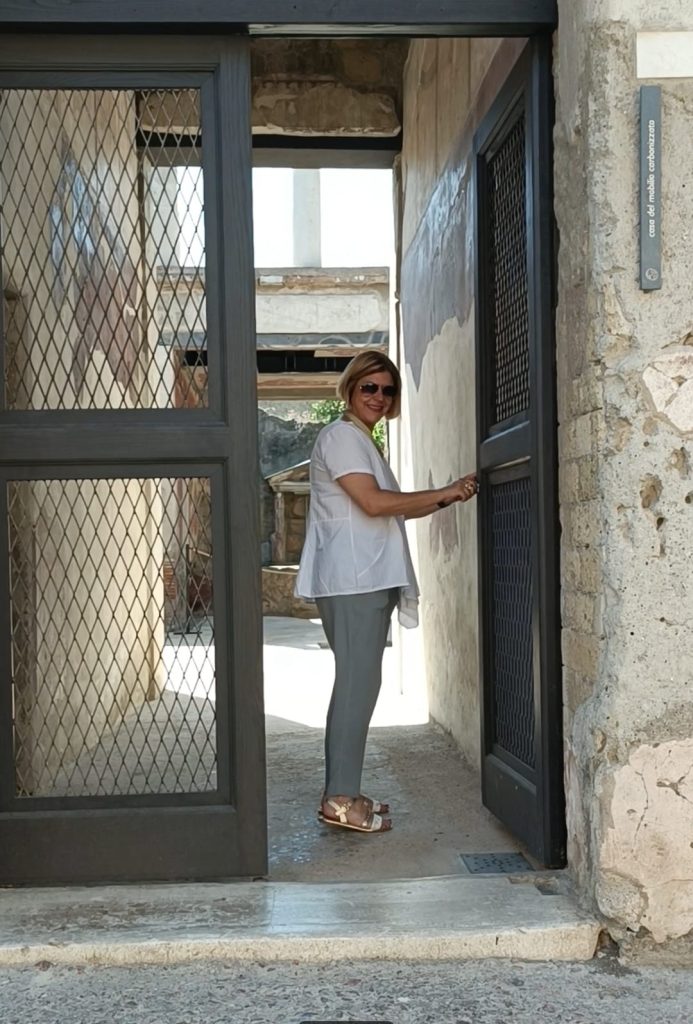
Federica Colaiacomo, Director of the Herculaneum Archaeological Park
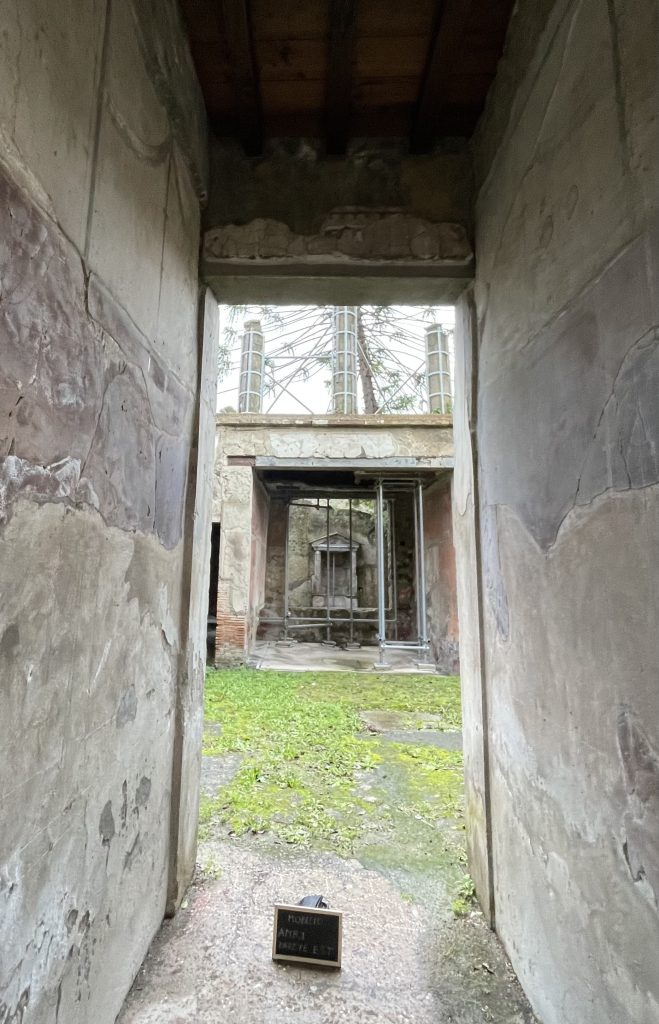
Fauces before restauration
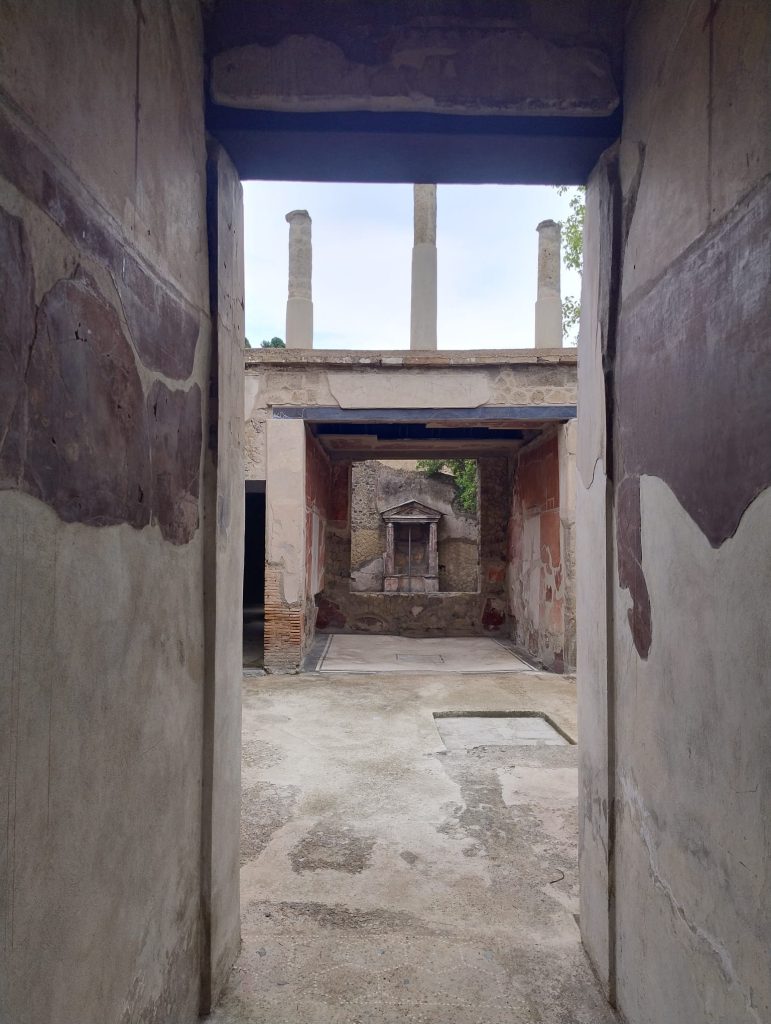
Fauces after restauration
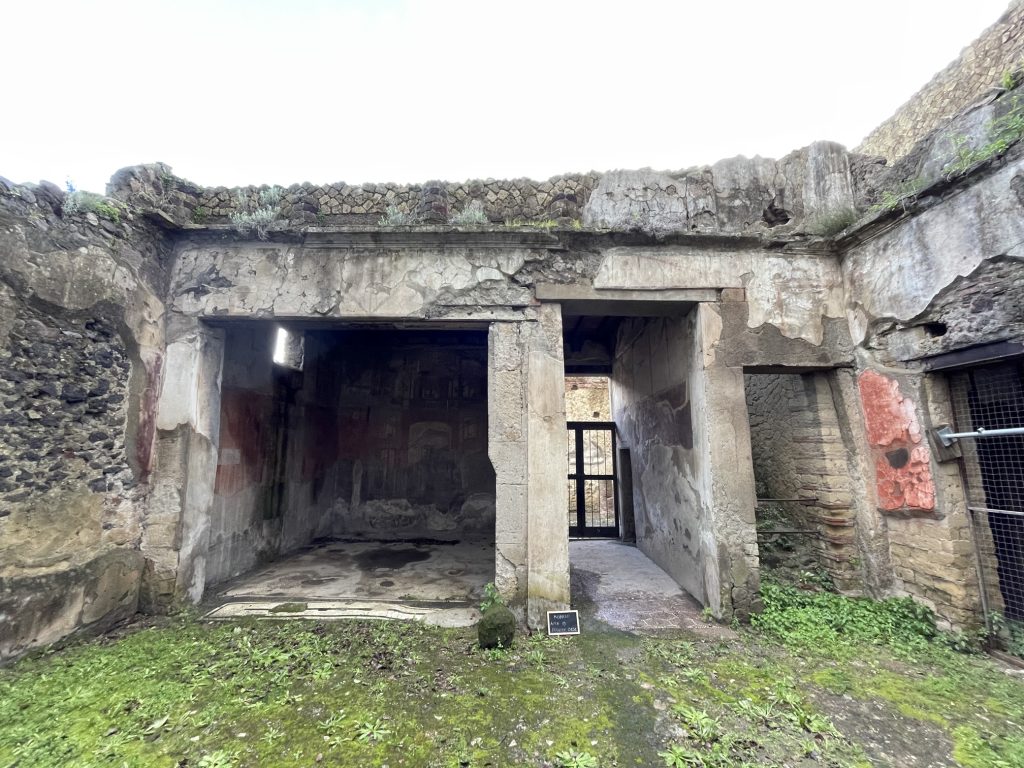
Atrium before restauration
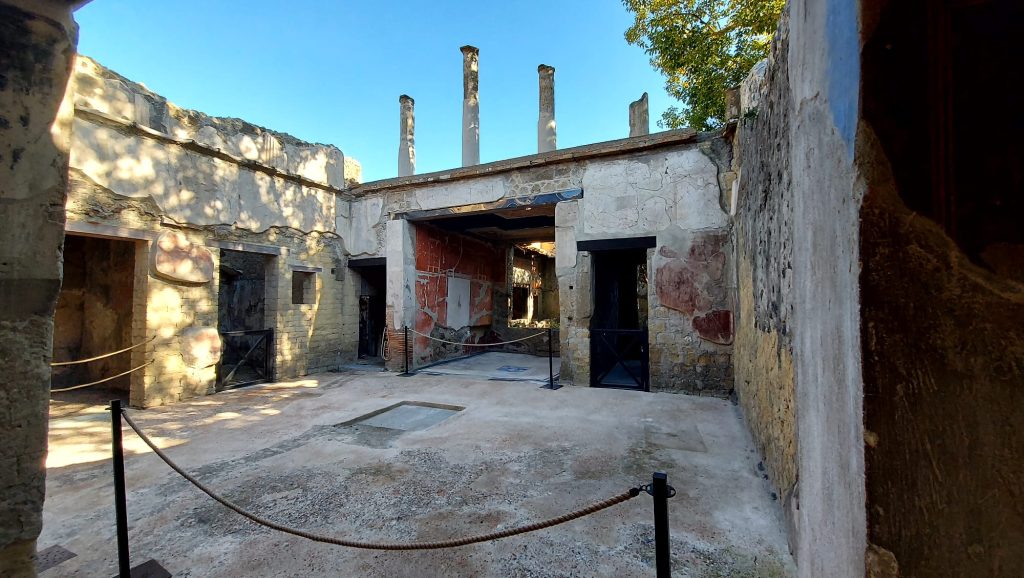
Atrium after restauration
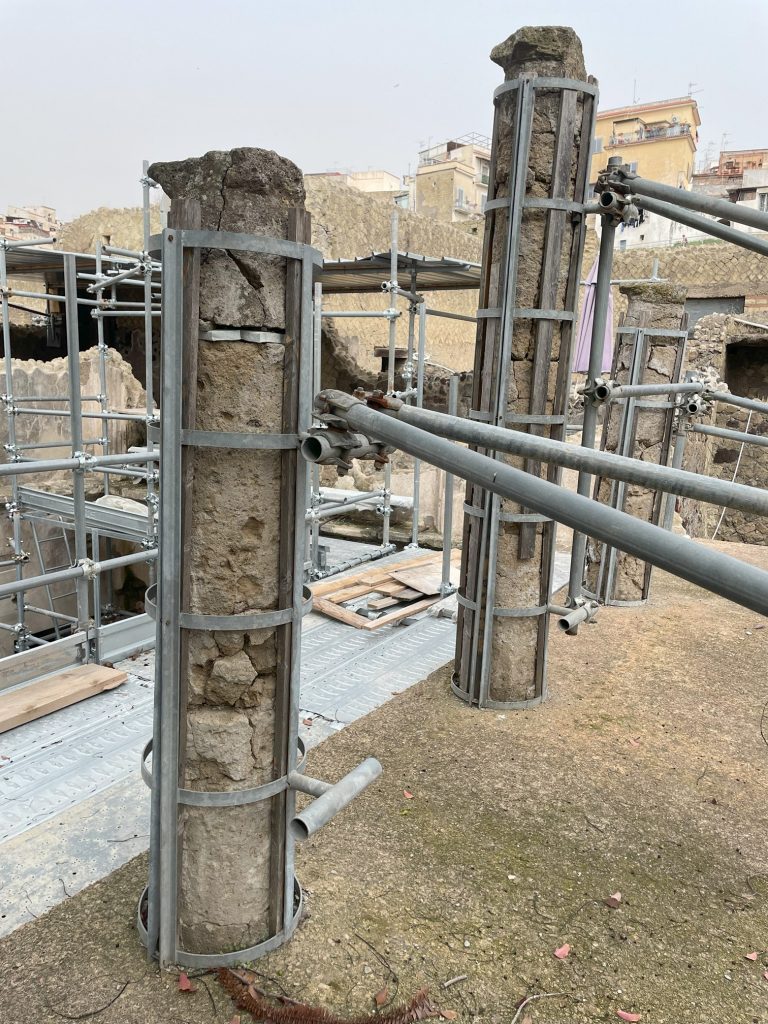
Columns before restauration
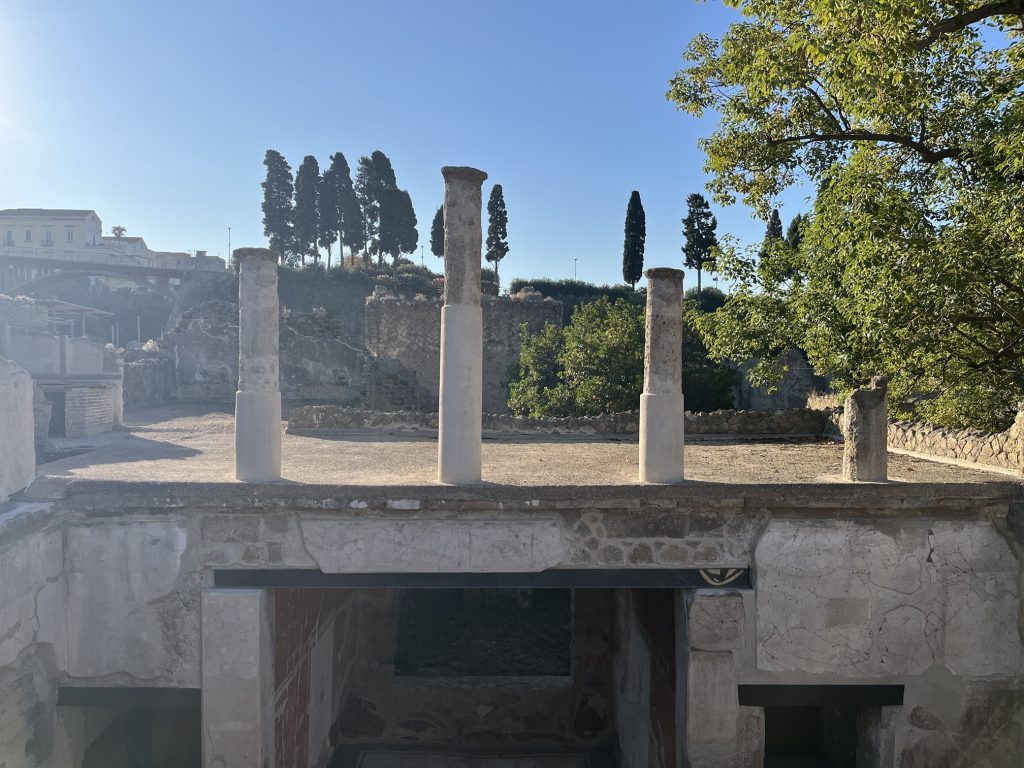
Columns after restauration
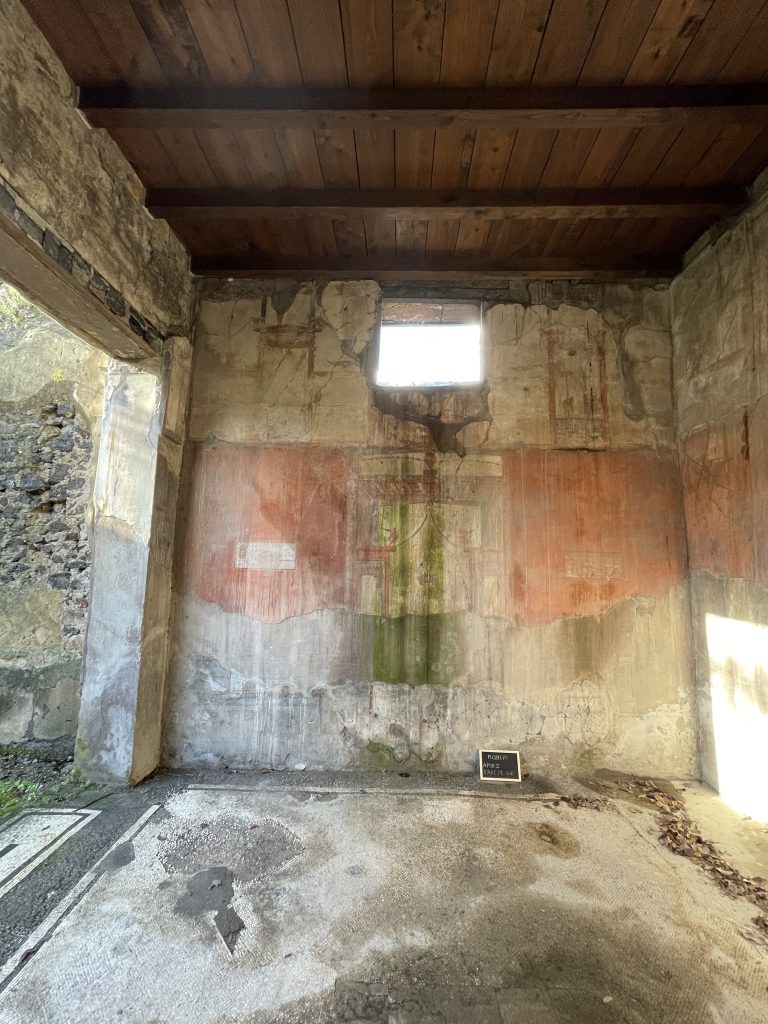
Wall S before restauration
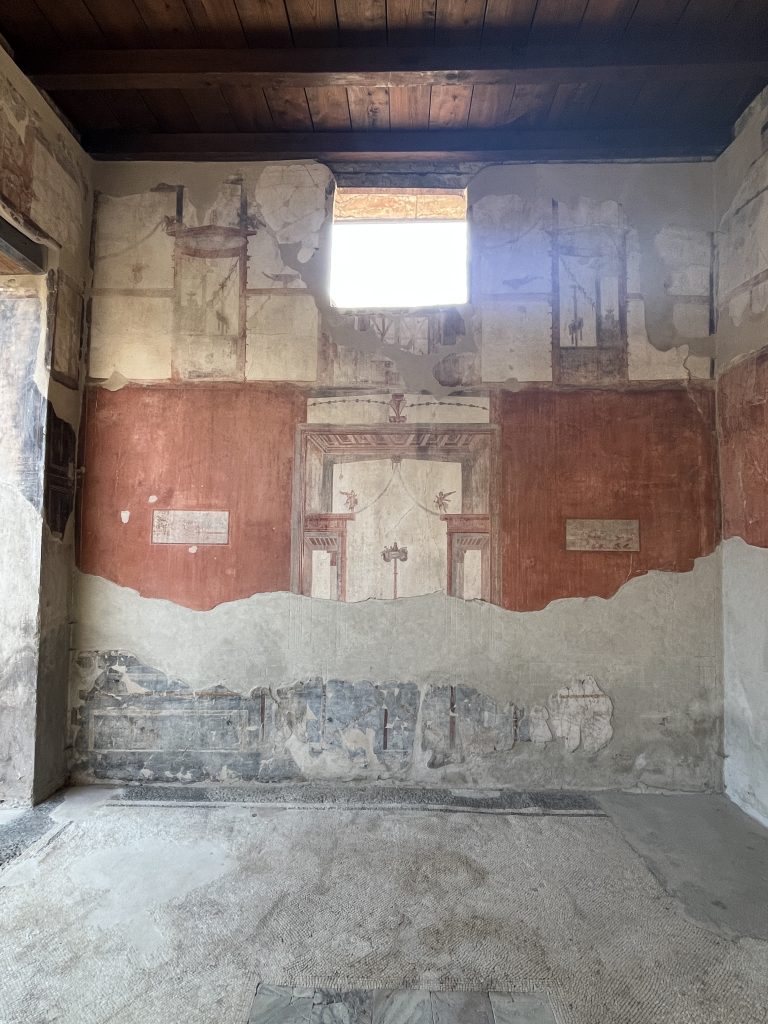
Wall S after restauration
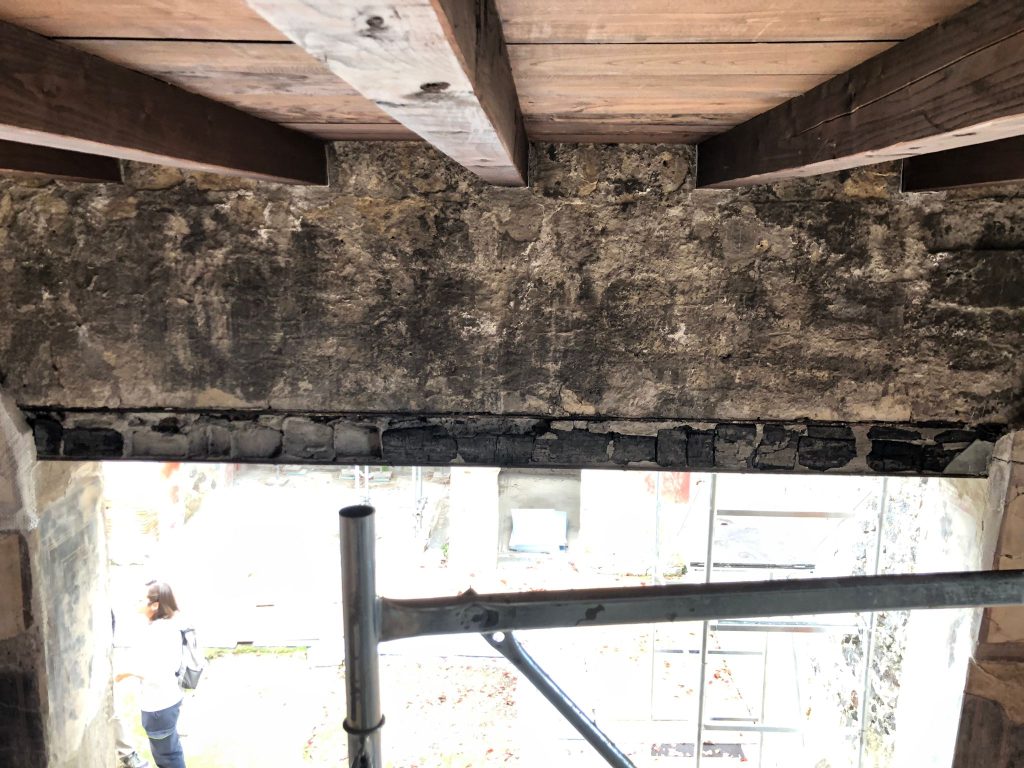
Oecus before restauration
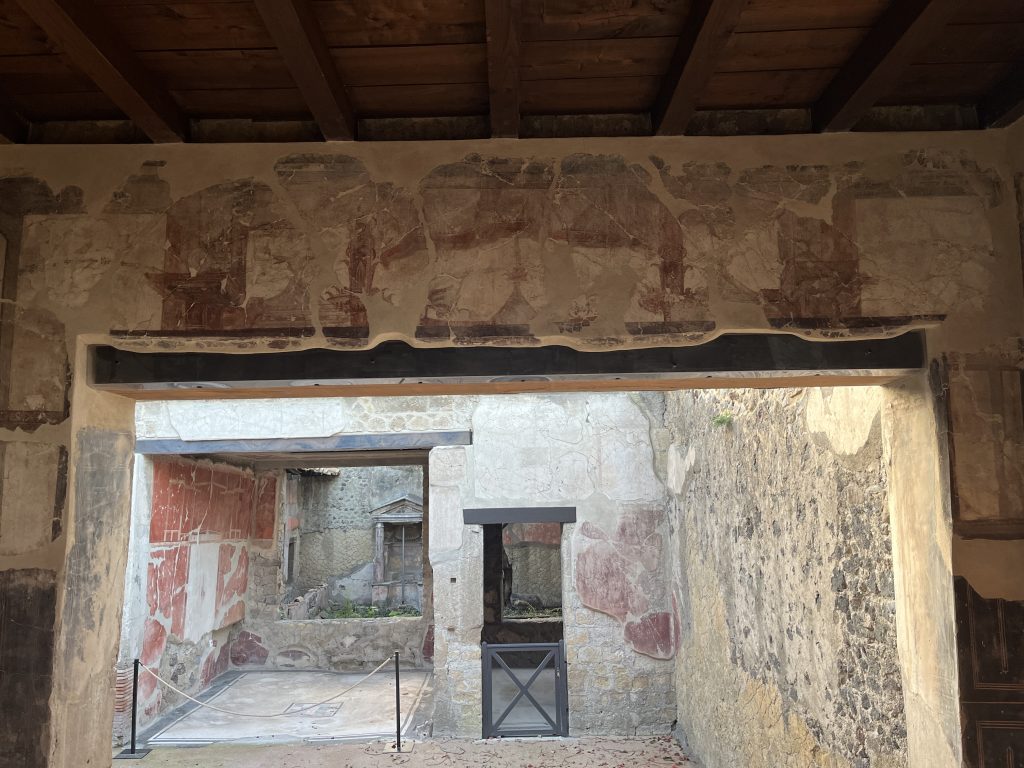
Oecus after restauration
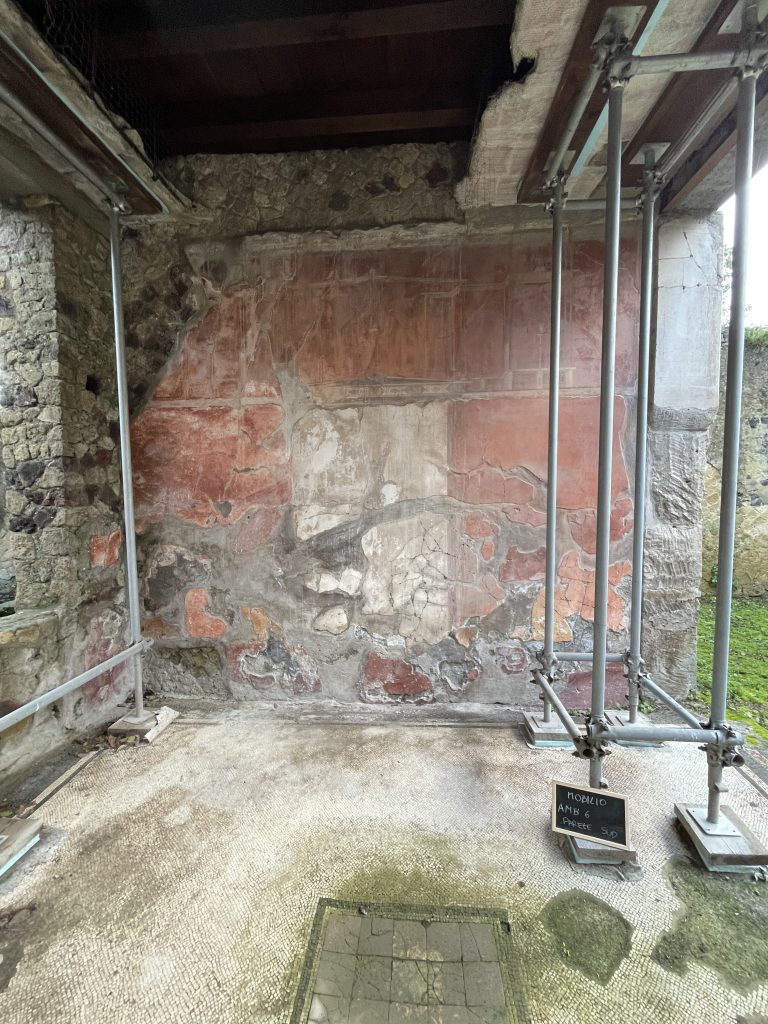
Tablinus before restauration
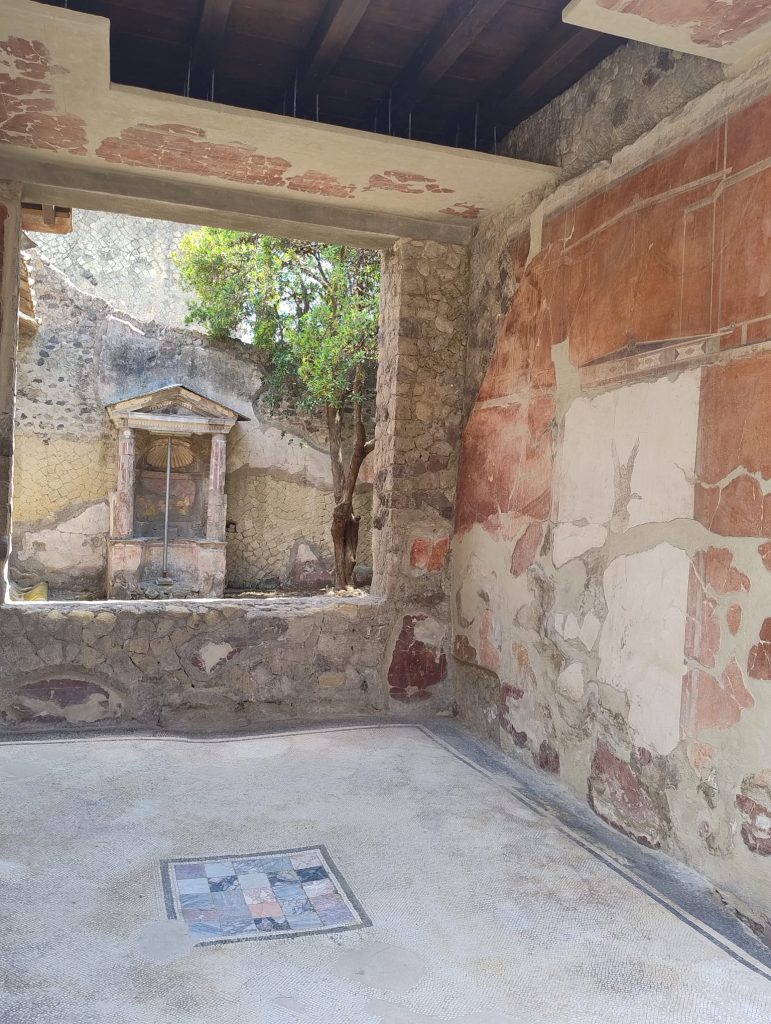
Tablinus after restauration