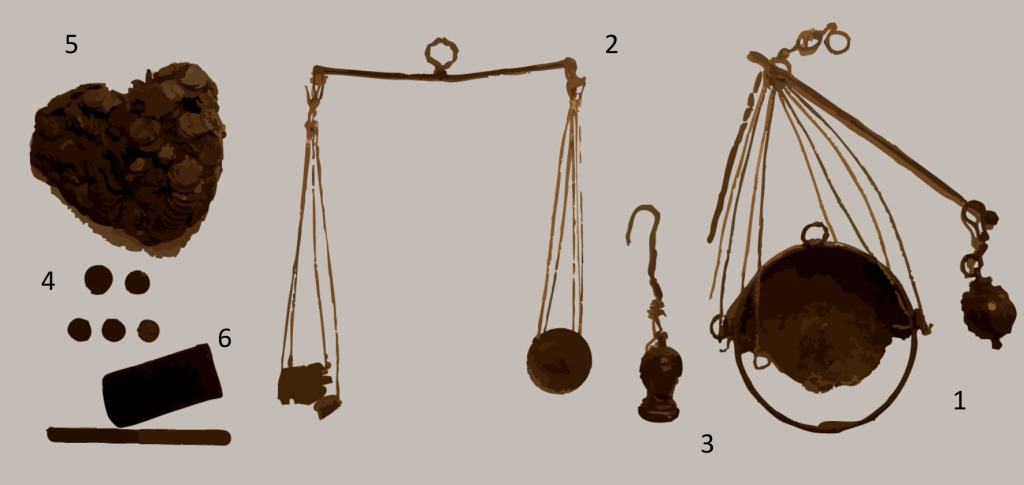
In this display case are everyday objects related to commercial transactions, which we might well have encountered while strolling through the streets of ancient Herculaneum, among artisan workshops and shops selling food and hot drinks.
Particularly noteworthy are the two bronze steelyards (scales), originating respectively from the House of the Alcove (1) and from one of the shops facing the Decumanus Maximus (2).
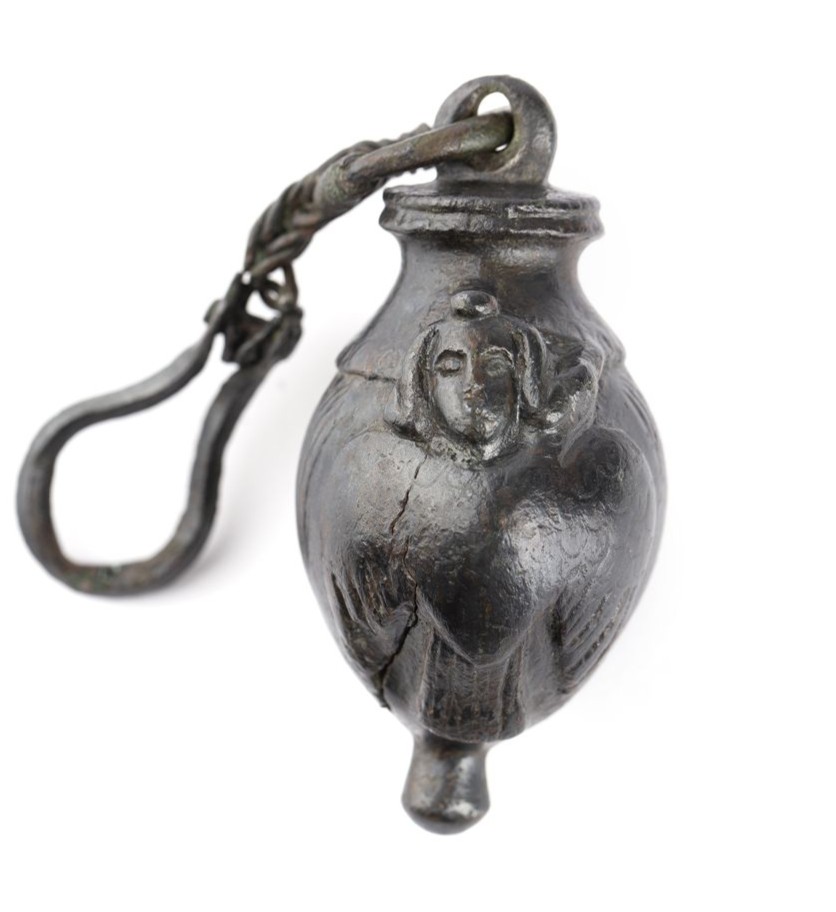
Two weights (aequipondia) stand out for the elegance of their decoration: the first depicts a sphinx/siren (1), part of the steelyard from the House of the Alcove. It is a mythological figure with distinctly feminine features, a raptor’s body, and finely chiseled wings, inspired by refined models from the Classical-era art of Magna Graecia.
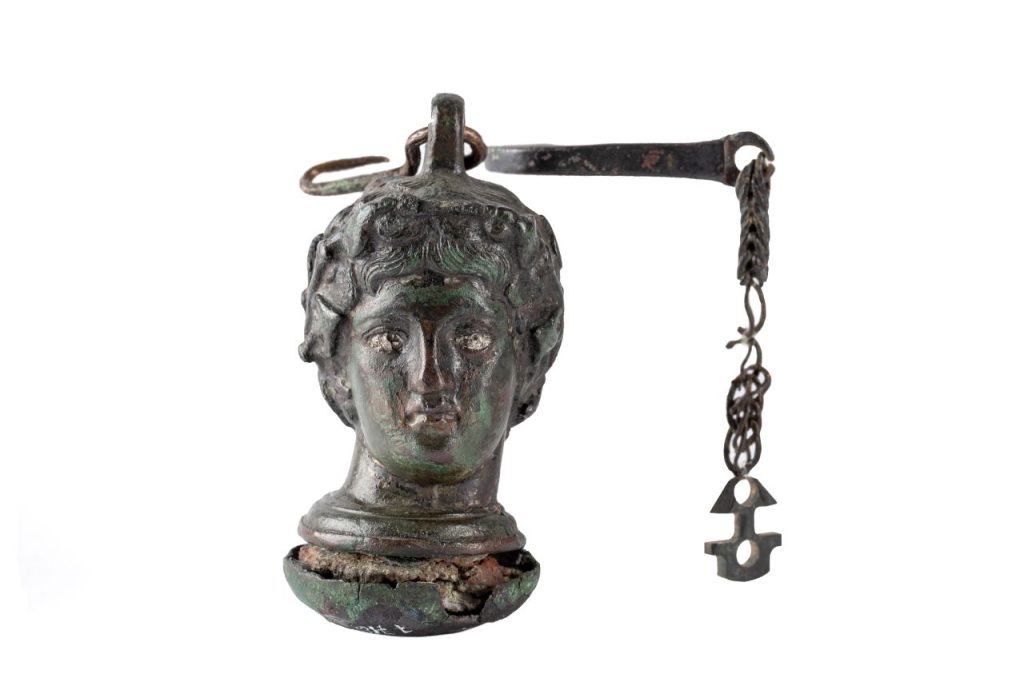
The other weight (3), from the House of the Beautiful Courtyard, depicts a youthful male head with idealized features, the gaze enlivened by thin silver sheets applied to the corneas. The face is framed by a headband with curled ends and a delicate, barely suggested ivy wreath. Completing the piece is a small chain, with a hook-shaped clasp at one end and a shaped plate with two eyelets at the other.
These weights were essential tools for merchants and artisans, used to weigh goods and even substantial loads, ensuring fairness in transactions.
On the left are bronze coins (4), well-preserved and legible: three bear the effigy of Emperor Vespasian and two that of his son and successor Titus, who was emperor at the time of the eruption of Vesuvius in 79 AD.
Visually and symbolically striking is a group of fused bronze and silver coins (5), melted together by the extreme heat of the pyroclastic flows. The mass has retained the shape of the wicker basket in which they were stored, with visible impressions of the weave still present on the bottom. The basket was found on the ancient shoreline of the city, next to the skeletons of those who had desperately tried to escape by sea.
Equally evocative is a coin purse (6 – locellus), also belonging to one of the fugitives on the beach. Made of wood, bronze, and silver, it features a sliding lid covered in bronze, with a small plate that likely once held a bar or knob for opening. The long sides and bottom are decorated with a silver sheet engraved with a vegetal motif. Inside were two coins: a sesterce of Vespasian and a silver denarius.