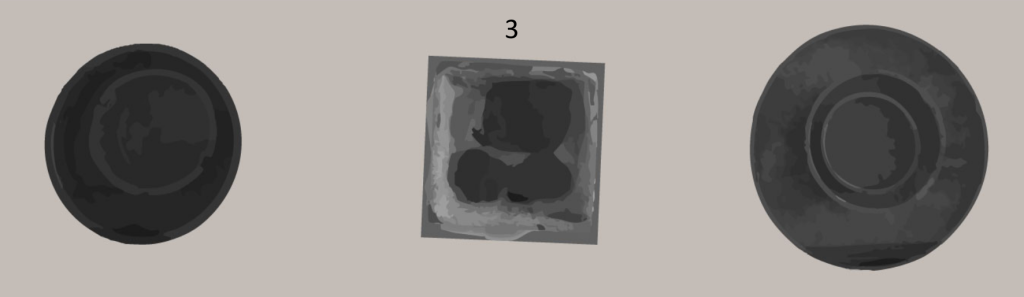


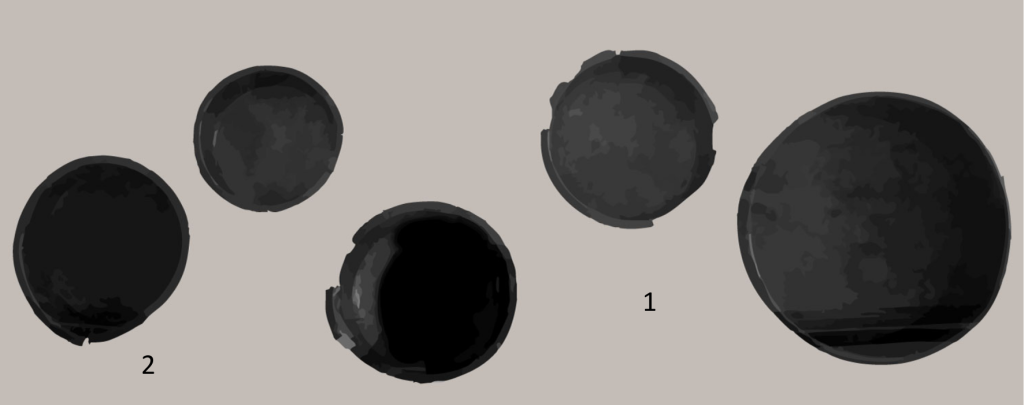
Displayed in this case are the baking pans used to cook various types of flatbreads. In one of the ancient ovens of Herculaneum, owned by Sextus Patulcius Felix, the entire production cycle was carried out: from grinding the wheat to kneading the flour, from baking to selling.
On August 1, 1936, 25 circular bronze pans were found in the mezzanine of the bakery, grouped and stacked, with diameters ranging from 15 to 50 cm and depths from 3 to 12 cm (1).
Some of them feature stamps on the inner base (2), unique to this specific batch, as they have not been found in Pompeii or elsewhere.
In addition to baking bread and flatbreads (placentae), the pans were also used to make pastries, such as sweet pizzas topped with honey and cheese.
Other baking pans of various shapes have been found at Herculaneum, including the square one displayed here, from the Samnite House (3).
The uniqueness of this item lies in the carbonized fabric remains found inside, which it retained the shape of. It’s possible that it was a cloth used in the kitchen, perhaps to store fresh food such as bread or flatbreads.